tighten up
Trading notes for 2025-08-14
By Sean WeldonTL;DR
Market showed signs of absorption at key lows with high volume but limited price movement, while tracking toward negative GEX levels for a potential reversal. My call spread position from Tuesday got caught in Thursday's unemployment-driven selloff, despite expecting the usual Thursday-Friday retracement pattern back into range.
Market Context
The market experienced significant volatility this week, particularly around the unemployment data release on Thursday. We saw substantial volume at the lows, but price wasn't moving further down - a classic sign of absorption where buyers are stepping in to support the market at these levels.
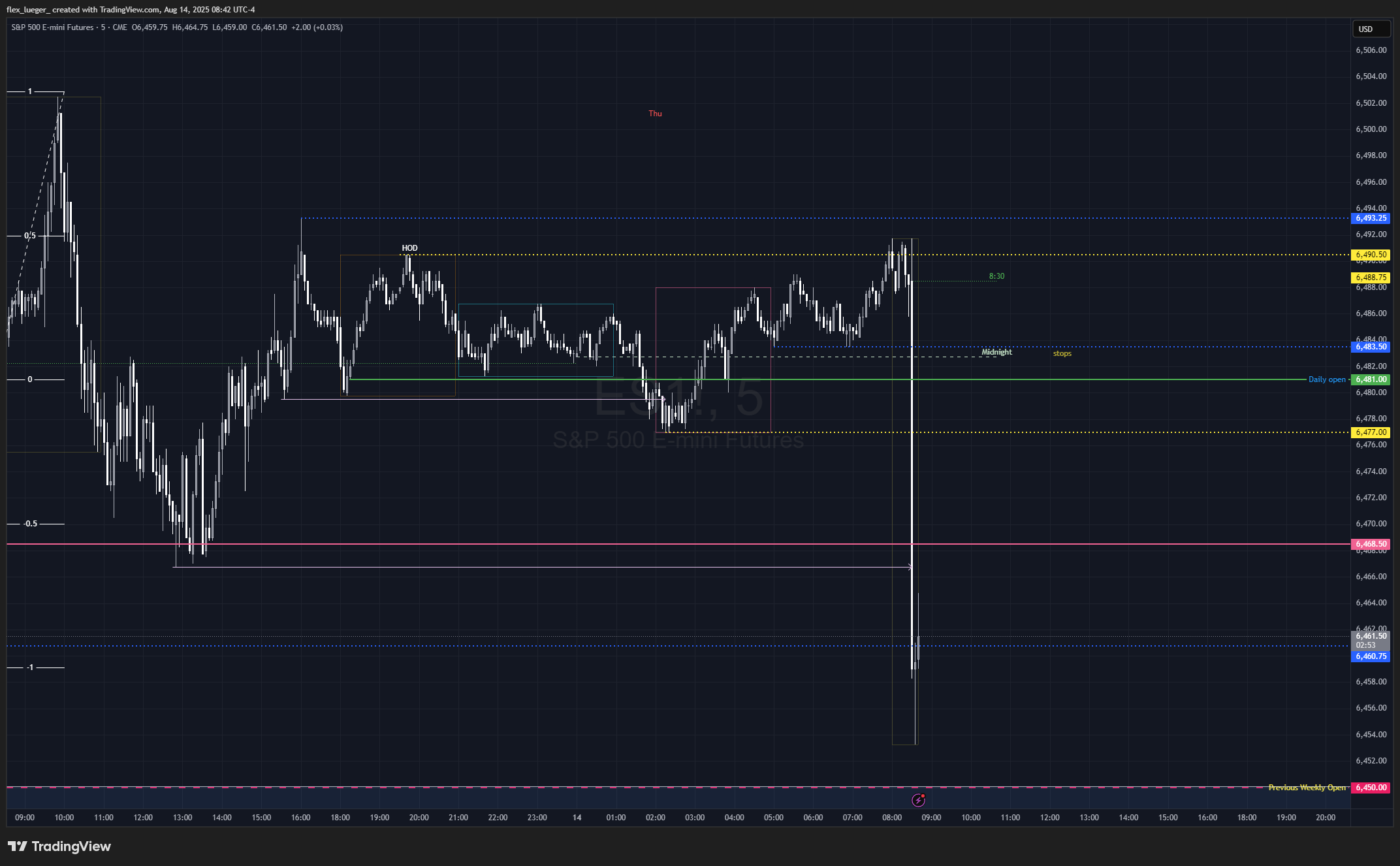
The market appeared to be running toward the high negative GEX (Gamma Exposure) levels, which typically act as magnets for price action before we see a reversal. This technical setup suggested we might see a touch of those levels followed by a bounce.
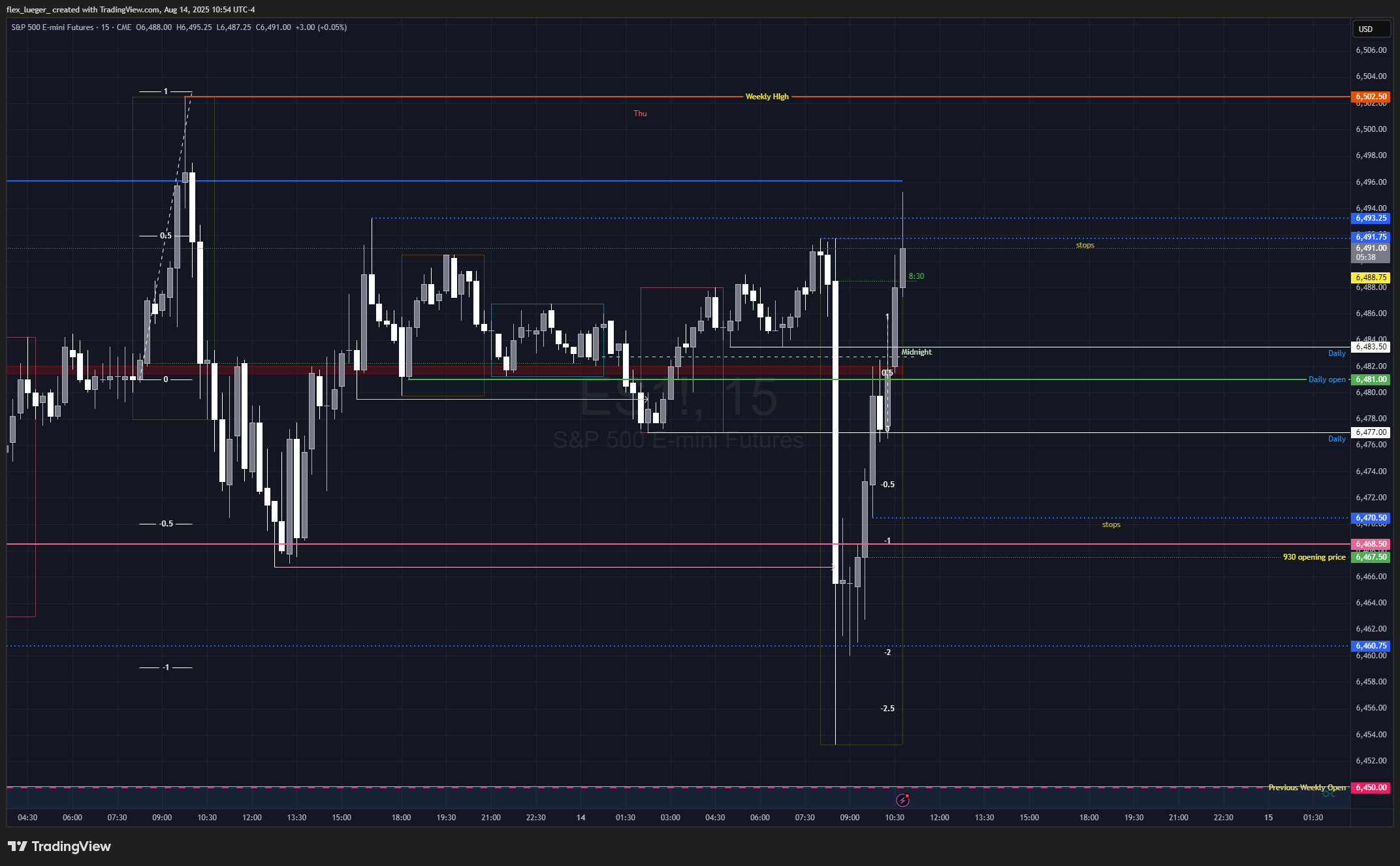
Thursday's unemployment numbers provided the catalyst for a significant market tank, creating the kind of sharp move that can quickly change the technical landscape.
Thesis & Plan
My trading thesis was built around a pattern I've observed consistently: after 2 days of market expansion, we typically see a retracement back into the previous range. This "Thursday into Friday never fails" pattern has been a reliable setup in my experience.
The plan was straightforward - position for this expected retracement by going long through a call spread, anticipating that the market would pull back from its extended move and return to more balanced levels within the established range.
Entries & Exits
I established a call spread position on Tuesday, positioning ahead of what I expected to be the typical mid-to-late week retracement pattern.

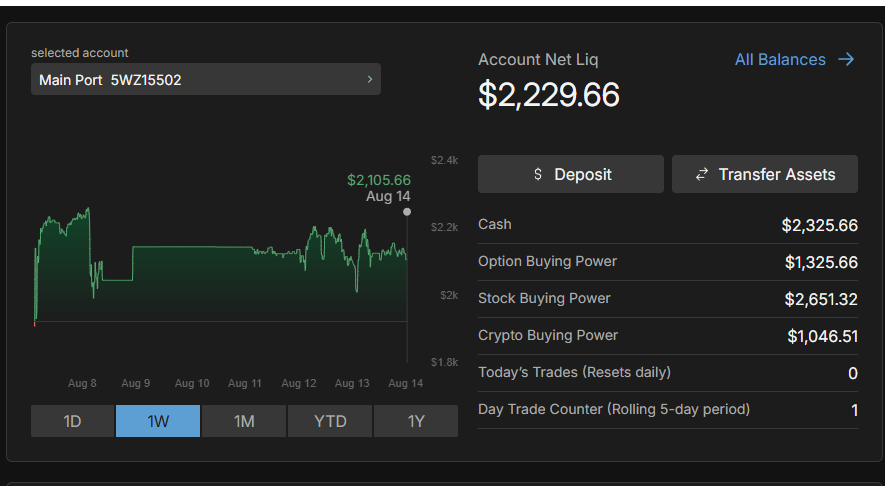
The timing seemed right based on the pattern, but Thursday's unemployment data release created a much stronger downward move than the typical retracement I was positioning for.
What Worked / What Didn't
What Worked:
- Correctly identified absorption signals with big volume at lows and limited price movement
- Properly tracked the negative GEX levels as potential reversal points
- Recognized the typical expansion pattern that often precedes range reversion
What Didn't Work:
- The call spread got caught in Thursday's unemployment-driven selloff
- The "Thursday into Friday" retracement pattern failed to materialize as expected
- Underestimated the impact of the economic data release on market structure
The most significant issue was the unreliable data from my UW (unusual whales) source, which once again provided false information that influenced my positioning. This has become a recurring problem that's affecting my trade quality.
Lessons Learned
The biggest takeaway from this week is the critical need to reassess my data sources. The UW data has consistently given me false information, and I can no longer rely on it for trading decisions. This is a fundamental issue that needs immediate attention - bad data leads to bad trades, regardless of how sound the technical analysis might be.
Key lessons for future trading:
• Data reliability is paramount - I need to find more dependable sources or develop alternative methods for gathering the information I use in my analysis
• Economic events can override technical patterns - While the Thursday-Friday retracement pattern has been reliable, major economic releases like unemployment data can create moves that break these typical patterns
• Absorption signals remain valuable - The volume/price relationship analysis at key levels continues to provide useful information about market structure and potential turning points
• GEX tracking is still relevant - The negative gamma exposure levels continue to act as important technical markers, even when other factors disrupt the expected price action
Moving forward, I need to develop a more robust system for trade preparation that doesn't rely on questionable data sources. This might mean simplifying my approach and focusing more heavily on pure price action and volume analysis, which have proven more reliable than third-party flow data.
The market structure analysis skills are sound - recognizing absorption, understanding gamma dynamics, and identifying expansion/retracement patterns. The issue lies in the supplementary data I'm using to time and size these setups. Getting this right is essential for consistent performance going forward.