Tariffs round 2 $150 profit
Trading notes for 2026-01-20
By Sean WeldonTL;DR
Markets continued their tariff-driven selloff with ES dropping another 1.5% on Tuesday, breaking a key swing low and reaching previously identified support levels. Successfully traded a call credit spread during the morning bounce into overhead resistance, capturing $150 profit on the 0DTE trade while maintaining a bearish bias and long EUR position.
Market Context
Monday was MLF day with markets closed, but futures opened down 1% and held those losses throughout the session. The selling pressure wasn't just a one-day event - it carried forward into Tuesday with conviction.
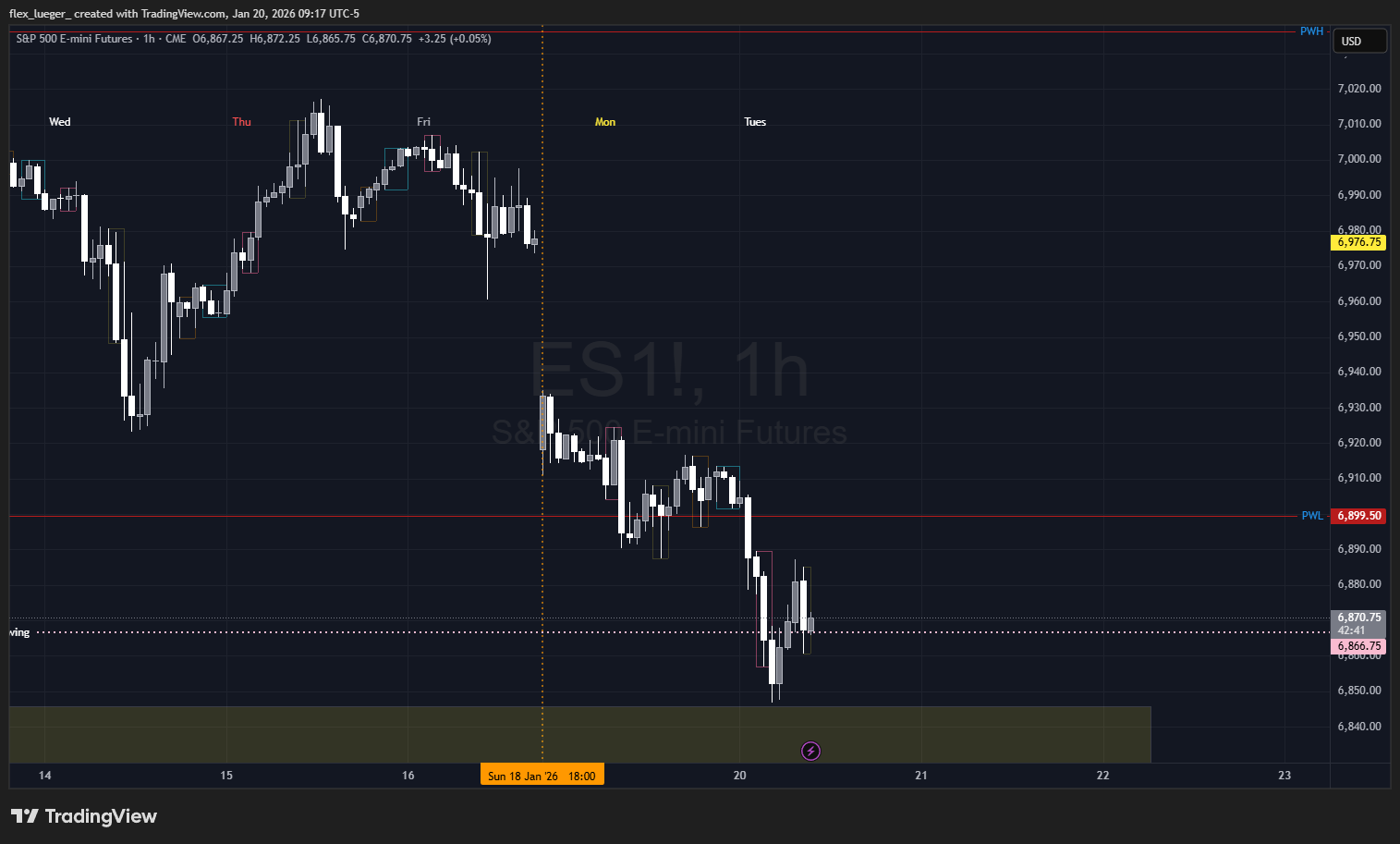
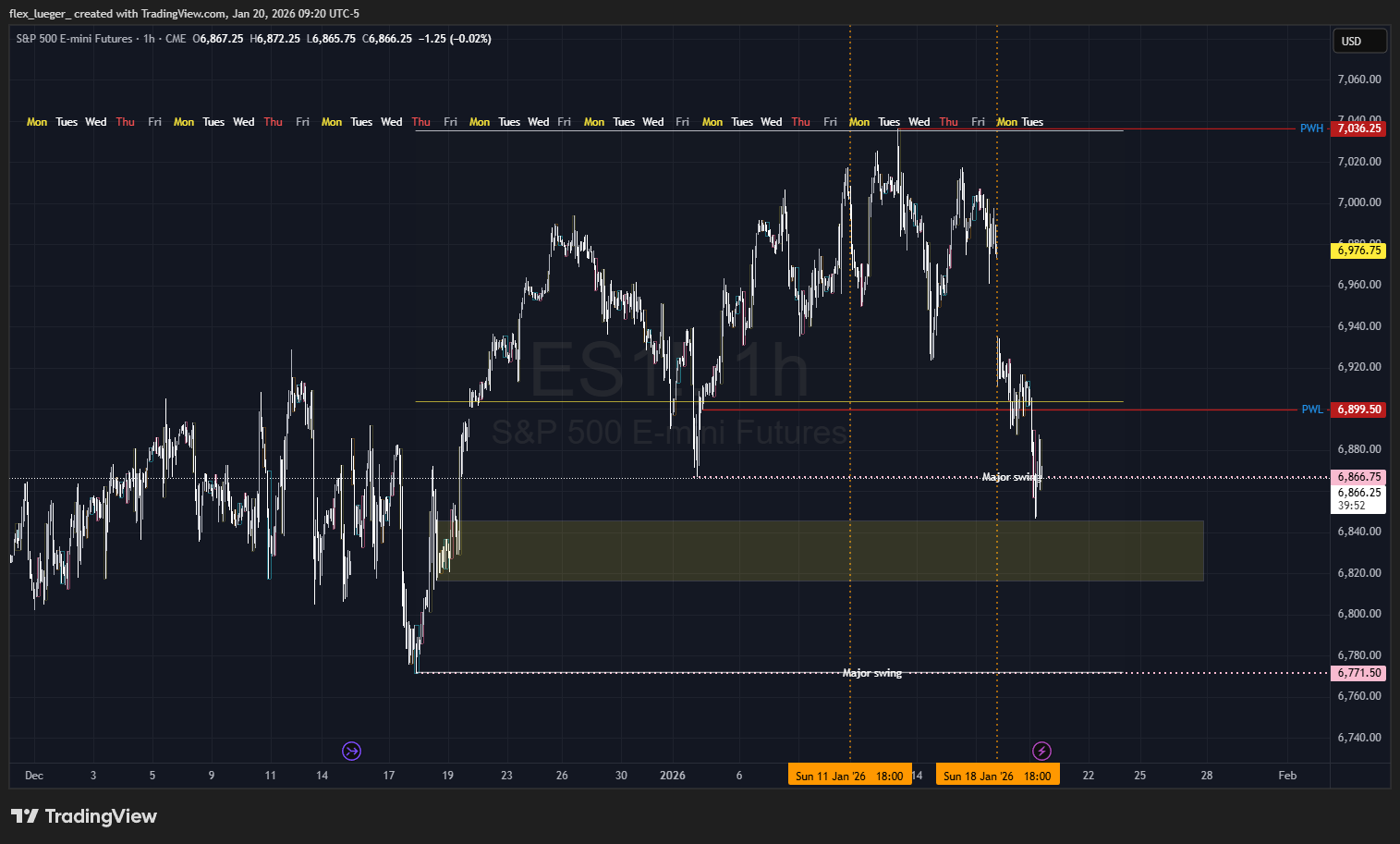
Tuesday delivered another 1.5% drop, which was significant because it finally took out the swing low I had identified as a key level last week. This breakdown confirmed the market's willingness to continue lower amid ongoing tariff concerns. The selling brought ES into a support zone I had previously marked, setting up an interesting inflection point.
The broader narrative remained centered on tariff fears, with markets clearly pricing in potential economic headwinds from trade policy uncertainty. This fundamental backdrop provided the bearish context that made fading bounces an attractive strategy.
Thesis & Plan
My primary thesis was that the market had more downside to give, particularly targeting the 6,771 level before I'd consider any meaningful long entries. The break of the swing low validated the bearish structure, and I wanted to see a more complete test of support before reversing my directional bias.
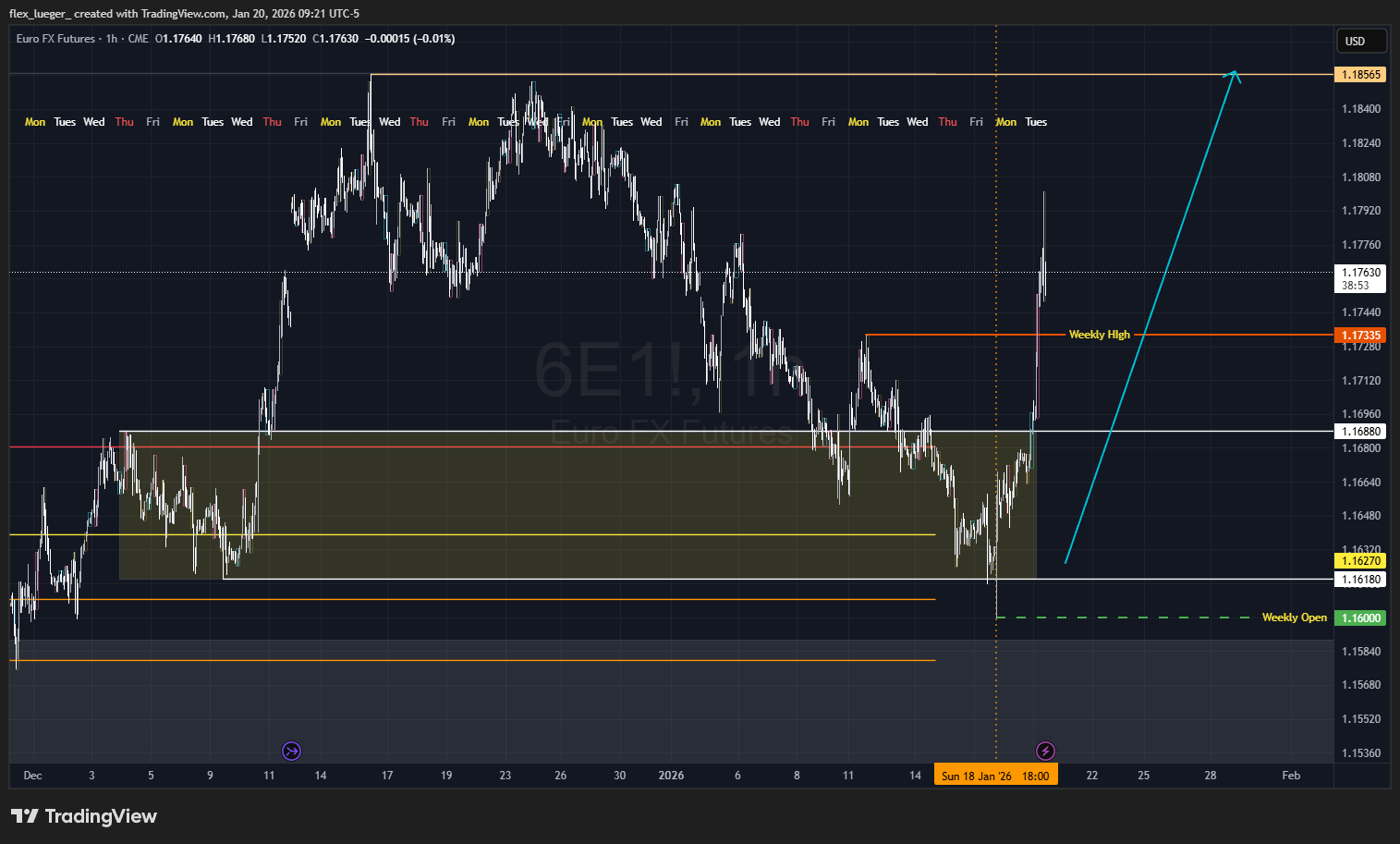
On the currency side, I was positioned long EUR as the US dollar came back under pressure. After several weeks of upward retracement that had mitigated previous selling, the dollar was showing renewed weakness. Sellers who had been holding through the recent bounce were getting their opportunity to resume the downward pressure.
Entries & Exits
At 11:30 AM, I executed a call credit spread on what appeared to be a textbook setup. Price had run back up into overhead resistance at the open, creating exactly the type of bounce I wanted to fade in this bearish environment.
The timing aligned with a 90-minute mitigation window, which added confluence to the trade setup. This wasn't a random short - it was a calculated entry based on multiple factors converging at once.
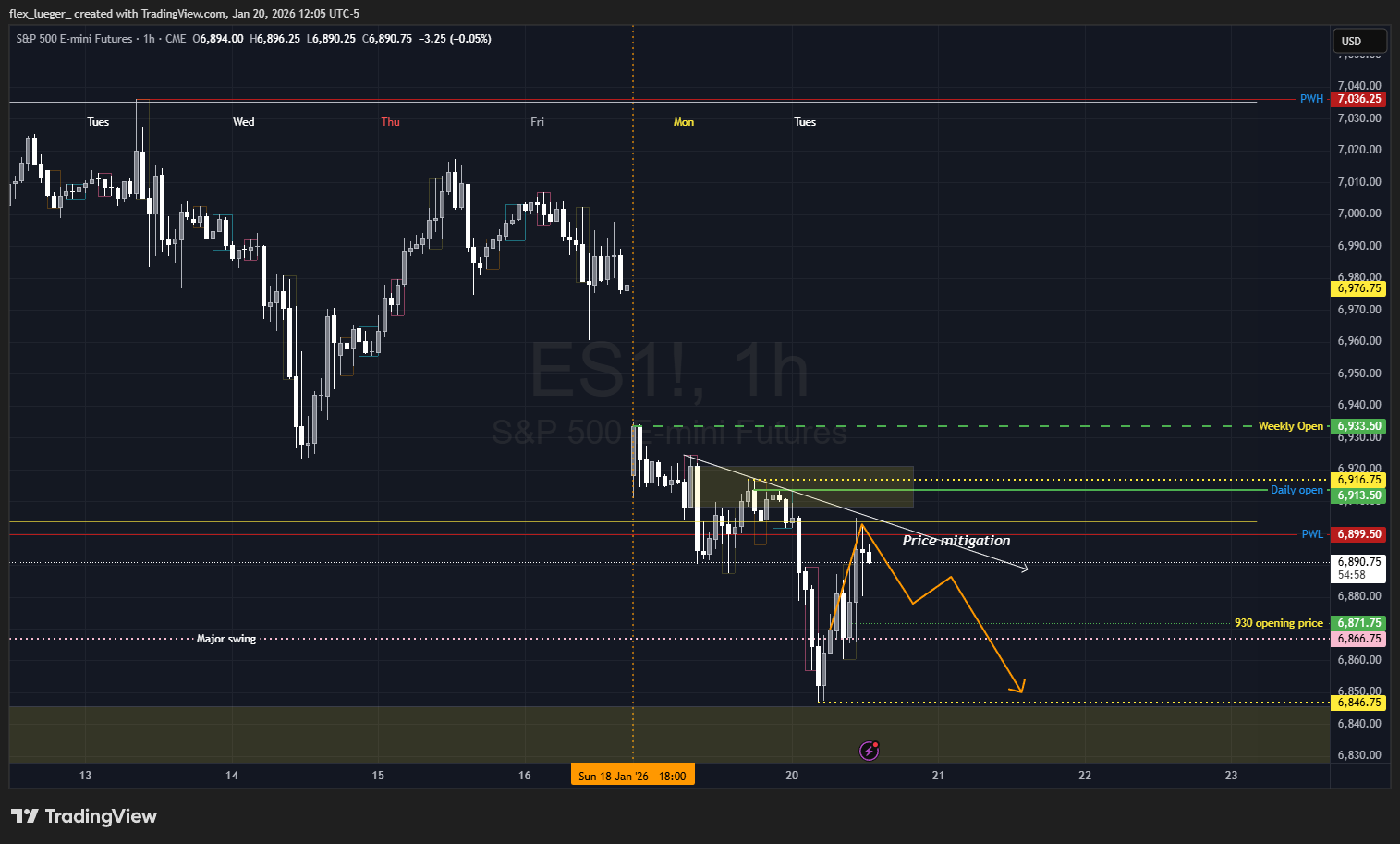

The trade executed cleanly and moved in my favor relatively quickly. Being a 0DTE trade, time decay was working for me as the short option seller, but I needed directional movement to really capitalize on the setup.
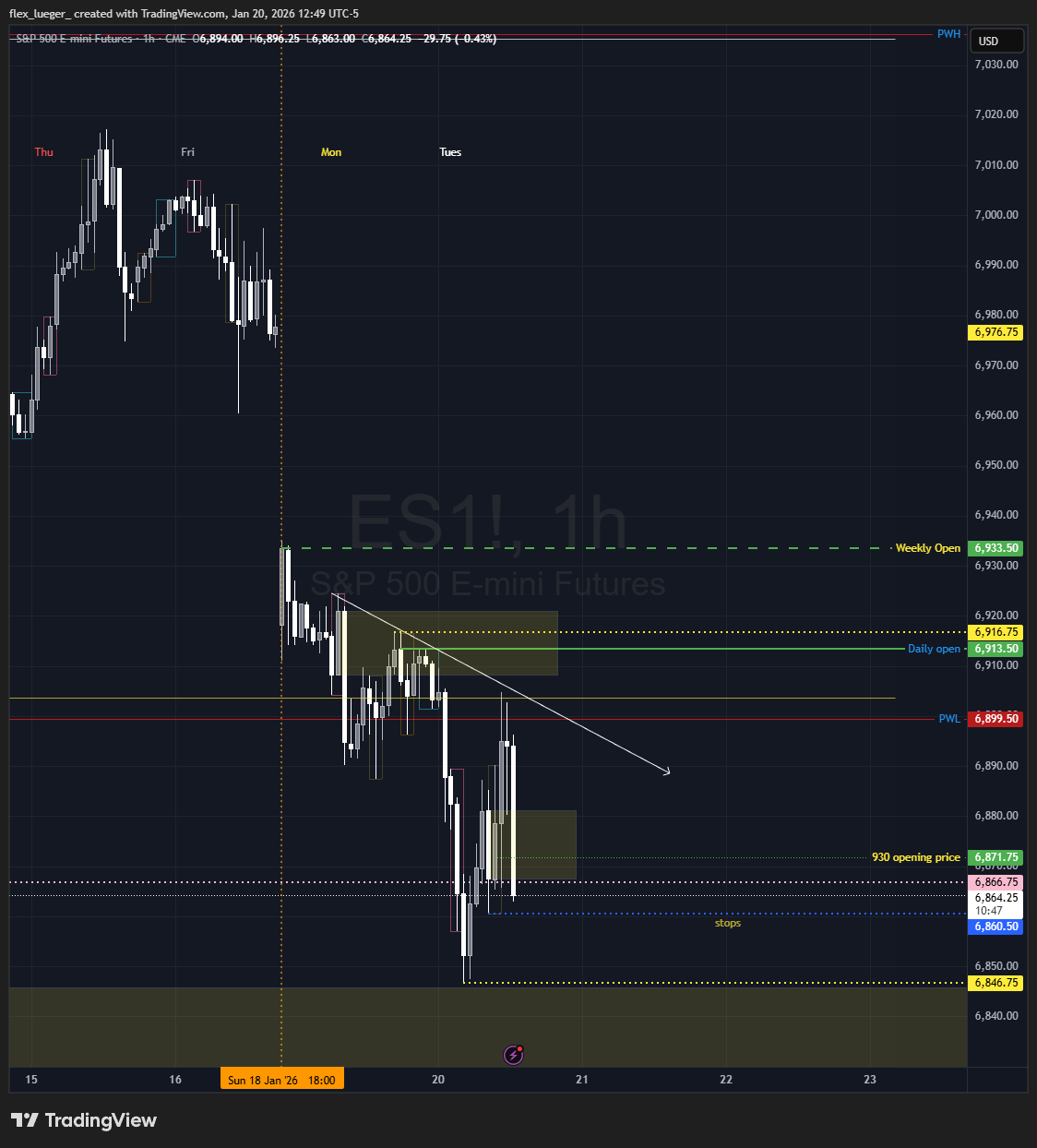

I closed the position for a $150 profit, which represented solid execution on a same-day expiration trade.
Risk Management
Using a call credit spread inherently limited my risk compared to naked short exposure. The defined risk nature of the spread meant I knew my maximum loss upfront, which is crucial when trading 0DTE options where moves can be swift and unforgiving.
The timing of the entry was critical for risk management - entering during the mitigation window gave me the best probability setup while the overhead resistance provided a logical level where the bounce should fail if my thesis was correct.
What Worked
The confluence of factors made this a high-probability trade. I had:
- Clear overhead resistance from the previous day's action
- A broader bearish context from the tariff selloff
- Technical confirmation from the swing low break
- Proper timing with the 90-minute mitigation window
The call credit spread structure was perfect for this setup, allowing me to profit from both time decay and directional movement while keeping risk defined.
What Didn't
While the trade worked out profitably, I could have potentially sized larger given the strong confluence of factors. The setup was clean enough that a more aggressive position might have been warranted, though conservative sizing also ensured I locked in profits without getting greedy.
Lessons Learned
This trade reinforced several key principles:
- Context matters: The broader tariff narrative provided the fundamental backdrop that made fading bounces logical
- Technical levels work: The overhead resistance level performed exactly as expected, rejecting price and allowing the bearish momentum to resume
- Timing is everything: Waiting for the specific mitigation window rather than just shorting randomly made all the difference
- Structure selection: Call credit spreads are excellent vehicles for fading bounces in bearish environments, offering defined risk with multiple ways to win
The key takeaway is maintaining patience for high-confluence setups rather than forcing trades. When multiple factors align - fundamental narrative, technical levels, and timing windows - the probability of success increases significantly. This trade exemplified that approach and delivered exactly the type of risk-adjusted returns that compound over time.