Range Expansion day thursday
Trading notes for 2026-02-12
By Sean WeldonTL;DR
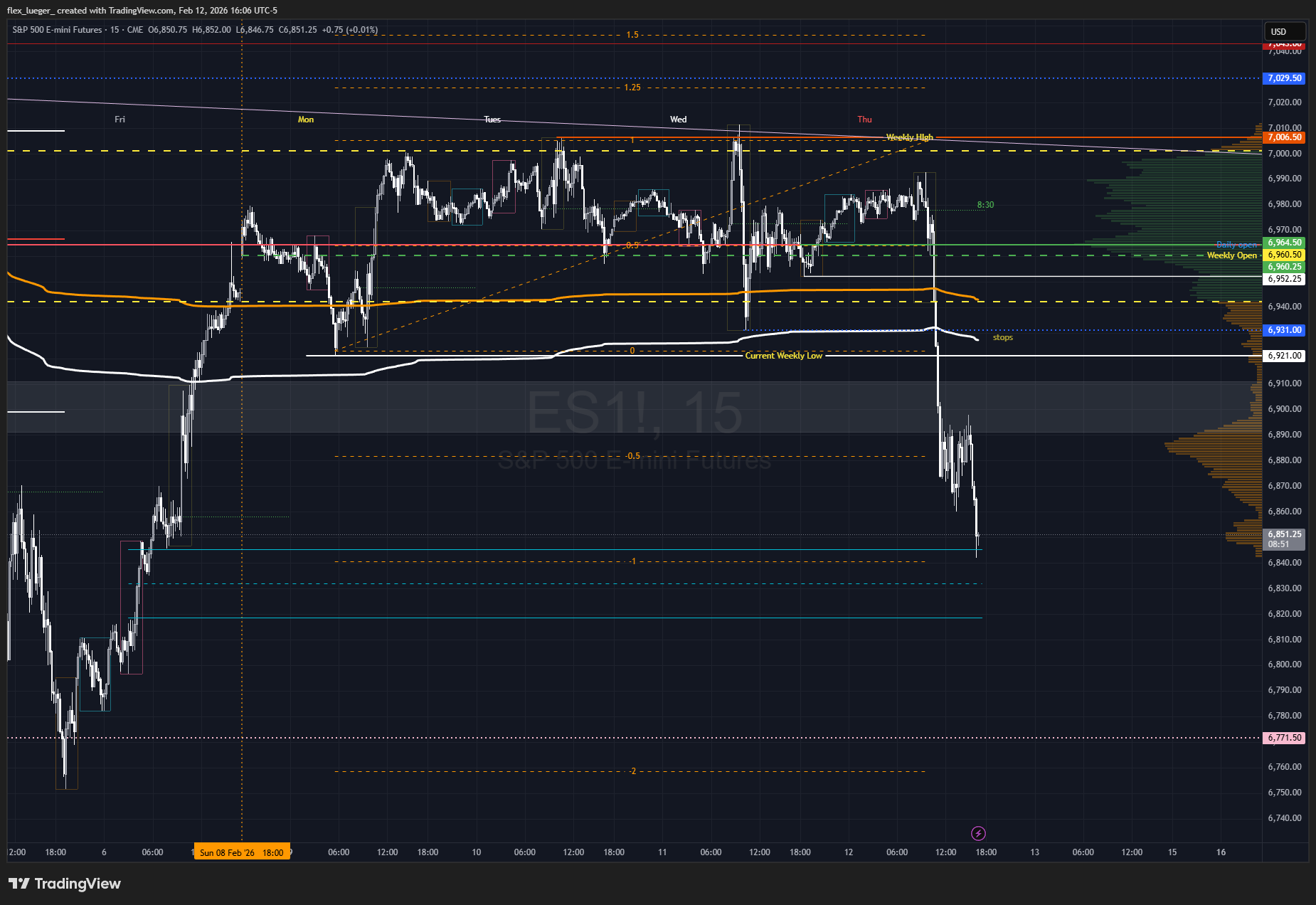
After three consecutive days of breakout buying that pushed to new highs Monday through Wednesday, Thursday delivered the classic opposing range expansion pattern to the downside. The market hit resistance and quickly reversed, closing at session lows near the 1 standard deviation level - a textbook example of late-week range expansion after early-week momentum exhaustion.
Market Context
The setup developed over a clear three-day pattern that's become quite familiar in my observations. Monday established the weekly high, then Tuesday and Wednesday both continued the momentum higher, with each day consecutively taking out the previous day's highs. This created a classic breakout trader environment with momentum clearly favoring the bulls.
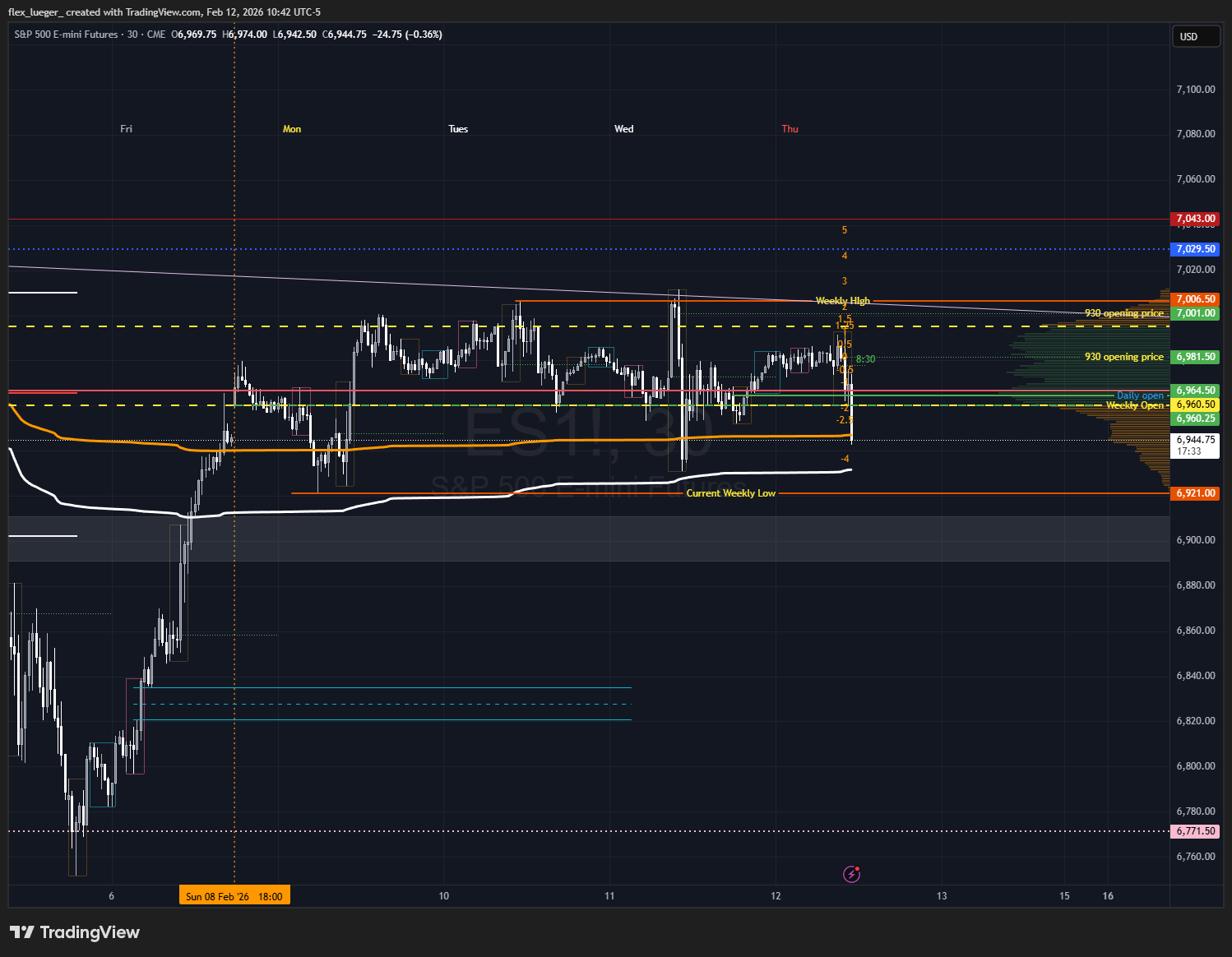
However, by Thursday, the market was showing signs that this three-day run might be reaching exhaustion. After hitting resistance, the setup was pointing toward a possible range expansion to the downside - exactly the kind of reversal pattern I've learned to watch for after extended breakout periods.
Thesis & Plan
My hypothesis was based on a recurring pattern I've observed: when Monday through Wednesday show consecutive higher highs with breakout momentum, Thursday and Friday often deliver the opposing move that expands the weekly range in the opposite direction. This isn't just random mean reversion - it's a structural pattern where early-week momentum gets exhausted and late-week action provides the balance.
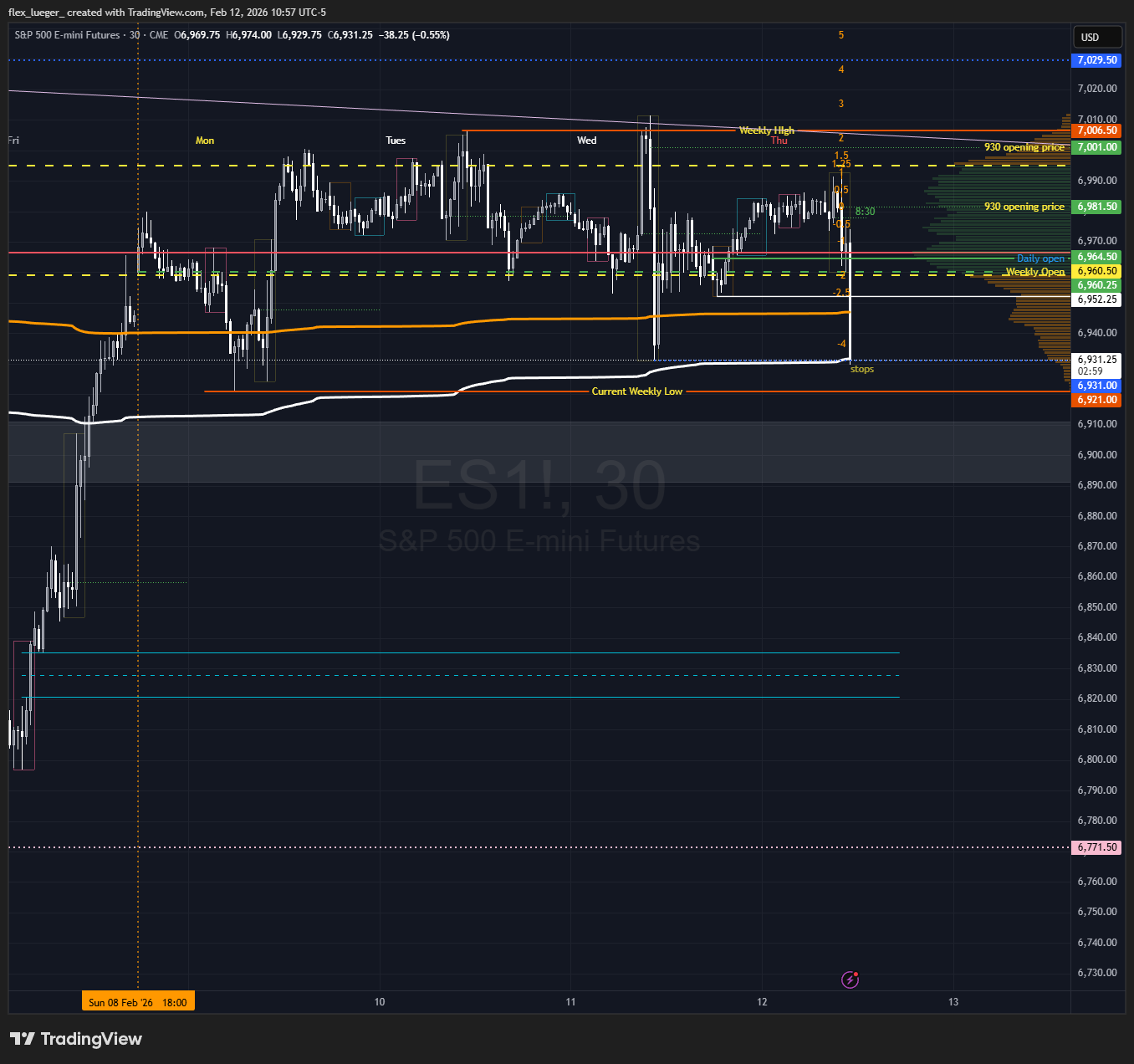
The plan was to watch for signs of this Thursday opposing range expansion and position accordingly for downside movement. The key was identifying when the breakout momentum was truly spent and the reversal was beginning.
Entries & Exits
The challenge with this setup was that the push to the downside developed very quickly and didn't provide many clean entry opportunities for shorts. This is actually typical of these opposing range expansion moves - they tend to be swift and decisive rather than providing multiple chances to get positioned.
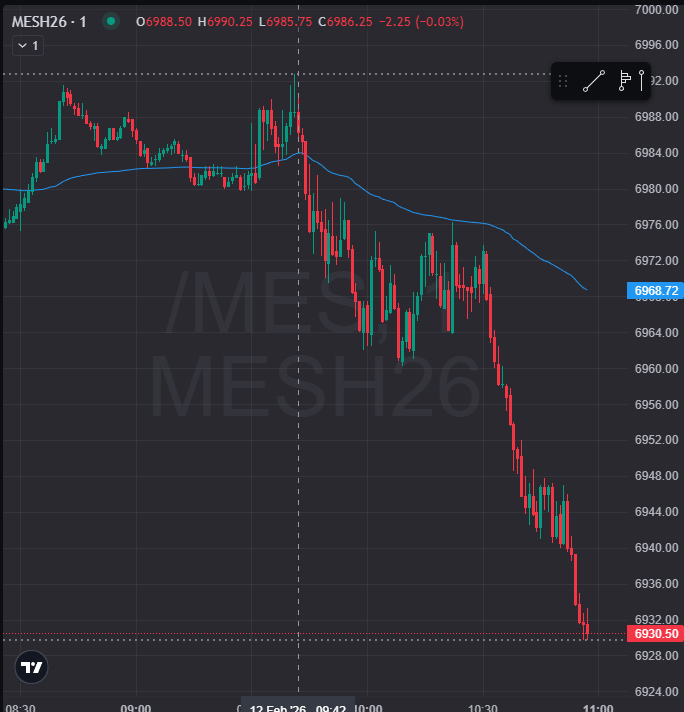
The action was very one-sided once it began, which is characteristic of this pattern. When the market decides to expand the range in the opposite direction after three days of momentum, it doesn't usually give you much time to think about it.
Risk Management
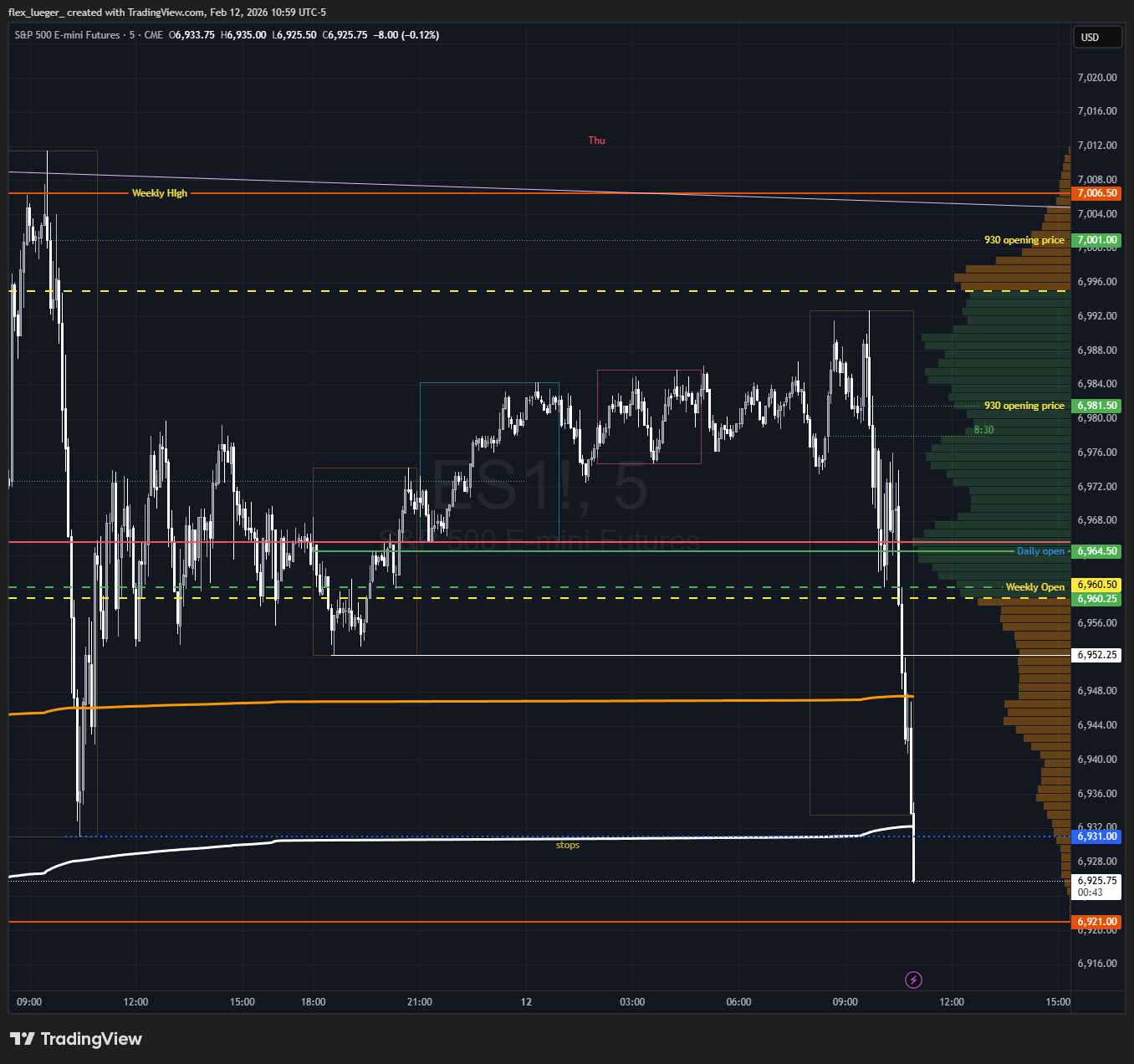
For profit targets on this type of move, I use a standard deviation measurement system that's proven quite reliable. I measure the range of the week (though this really only applies to the back end of the week, not when the range is still developing) and draw out 0.5, 1, and 2 standard deviation levels.
Today's move ran right to the 1 standard deviation level, which proved to be an excellent profit-taking zone. The market closed at its lows, right at this measured target.
What Worked
Several elements of this trade worked exactly as anticipated:
- The pattern recognition was spot-on - three days of consecutive highs followed by Thursday reversal
- The standard deviation measurement system provided an accurate profit target
- The understanding that these moves tend to be swift and one-sided helped set appropriate expectations
- Reading the exhaustion of breakout momentum after three consecutive days proved accurate
What Didn't
The main challenge was the speed and lack of entry opportunities. While I correctly identified the pattern and direction, the execution was made difficult by how quickly the move developed. This is actually a feature, not a bug, of this pattern - but it does mean you need to be prepared and positioned quickly when the setup triggers.
Lessons Learned
This trade reinforced several important concepts about weekly range expansion patterns:
- Three-day momentum exhaustion is real: When you see Monday-Tuesday-Wednesday consecutive breakouts, start looking for Thursday-Friday opposing moves
- Speed matters: These opposing range expansions tend to be swift and don't offer many second chances for entry
- Standard deviation targets work: Using weekly range measurements with 0.5, 1, and 2 standard deviation levels provides reliable profit targets, especially for back-end-of-week moves
- Pattern timing is crucial: This measurement system really only applies once you're in the back end of the week, not while the range is still developing
The key rule I'm reinforcing from this trade: when you see three consecutive days of breakout momentum in one direction, prepare for the opposing range expansion on days four and five. The market often needs to balance these extended moves, and the standard deviation measurement system provides excellent guidance for where that balance might find temporary equilibrium.
This was a textbook example of pattern recognition paying off, even when execution wasn't perfect due to the speed of the move.