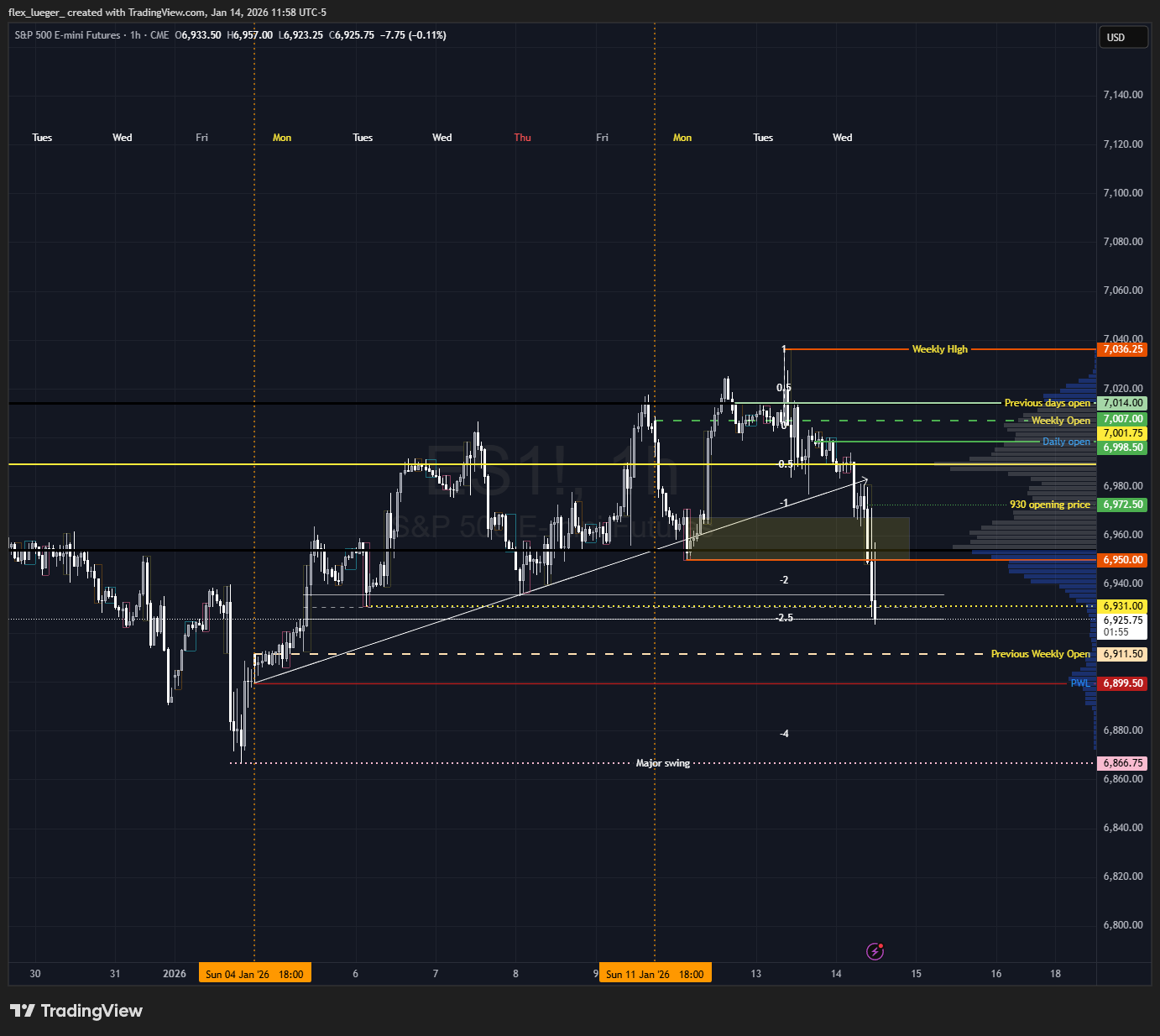
mid week reversal from ATH
Trading notes for 2026-01-14
By Sean WeldonTL;DR
A frustrating trading session where I closed a weekly PUT position too early on Monday, only to watch the market drop significantly in my favor over the following days. The broader market showed continuous selling pressure across all sessions, while oil, Bitcoin, and other risk assets displayed interesting setups that I monitored but didn't trade.
Market Context
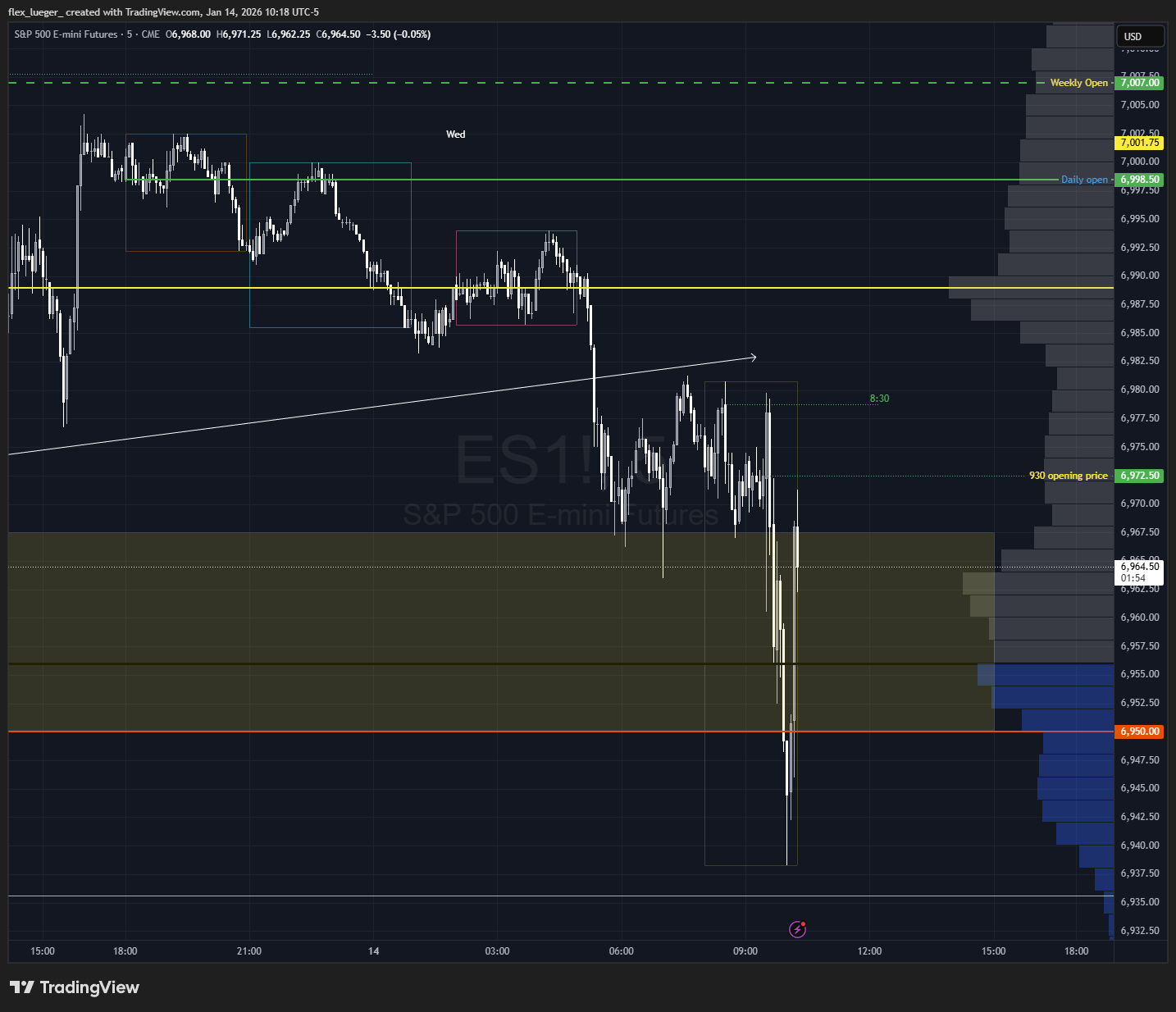
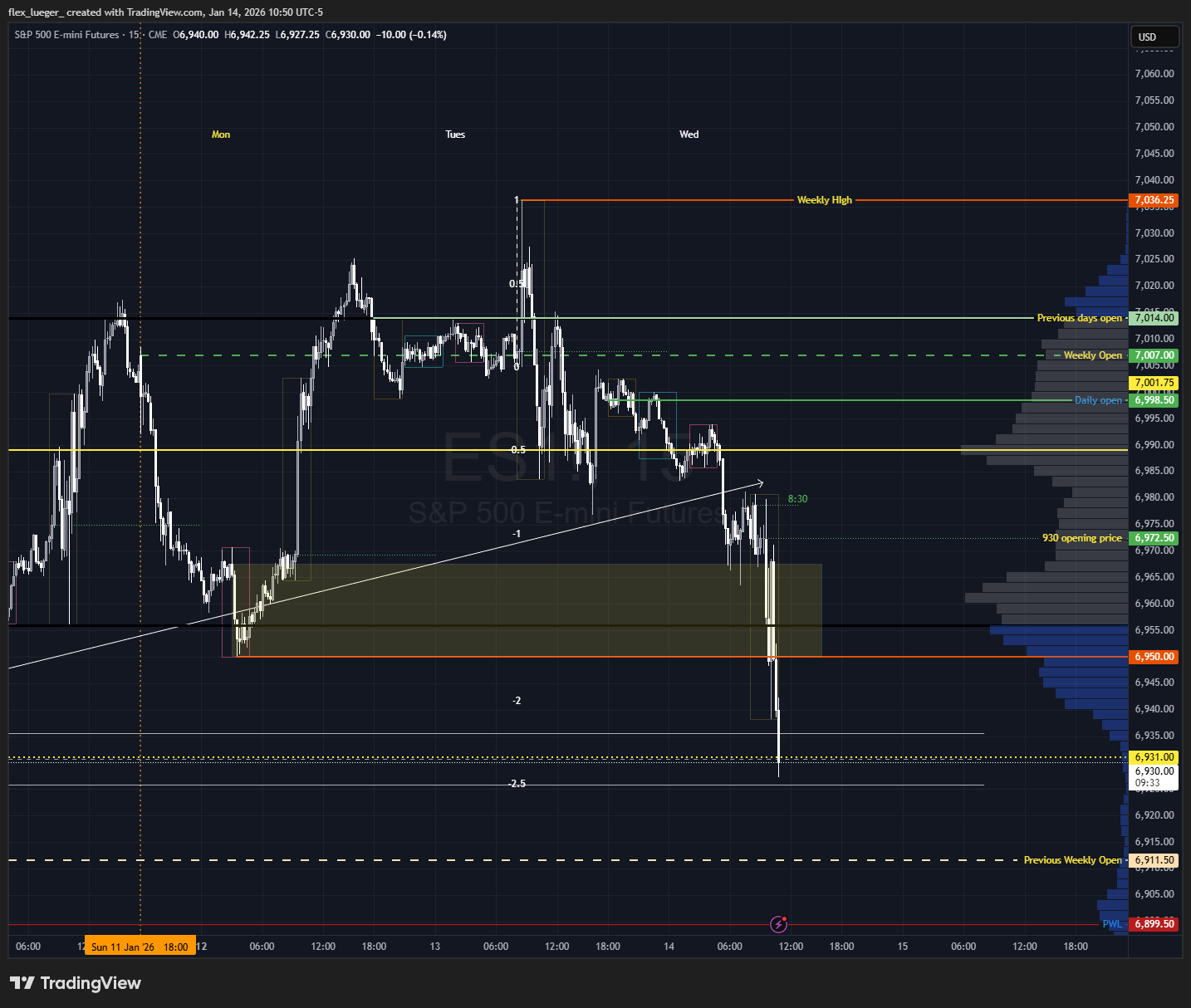
The market opened with continued selling pressure that had begun in Asian and London sessions. PPI data came out at 8:30 AM with positive numbers, but the market showed little immediate reaction. By the 9:30 open, downward pressure intensified, taking out Monday's lows in what appeared to be a classic "drop base drop" pattern across all three major trading sessions.
This type of continuous selling across Asian, London, and New York sessions created an environment where I typically avoid trying to catch falling knives. The sustained bearish momentum suggested institutional selling pressure rather than just retail panic.
Thesis & Plan
My original thesis from the previous week was that the market would retrace into its range after breaking all-time highs. This directional bias led me to enter a PUT position following Friday's NFP release, targeting a 7 DTE expiration.
However, when Monday brought a rally that took out the highs, I made the decision to close the position for 2x returns rather than hold through what I perceived as adverse movement.
For Wednesday, I maintained a bearish bias, particularly noting that London's close coincided with continued selling pressure. This gave me conviction for potential Thursday range expansion to the downside, as NY selling pressure appeared to be building.
Entries & Exits
PUT Debit Spread Trade:
- Entry: January 9th after NFP release
- Entry Price: $15.25 for the spread
- Exit: January 12th (Monday)
- Exit Reason: Market rallied 2x, decided to take profits
- Current Value: $20.75 (would have been profitable if held)

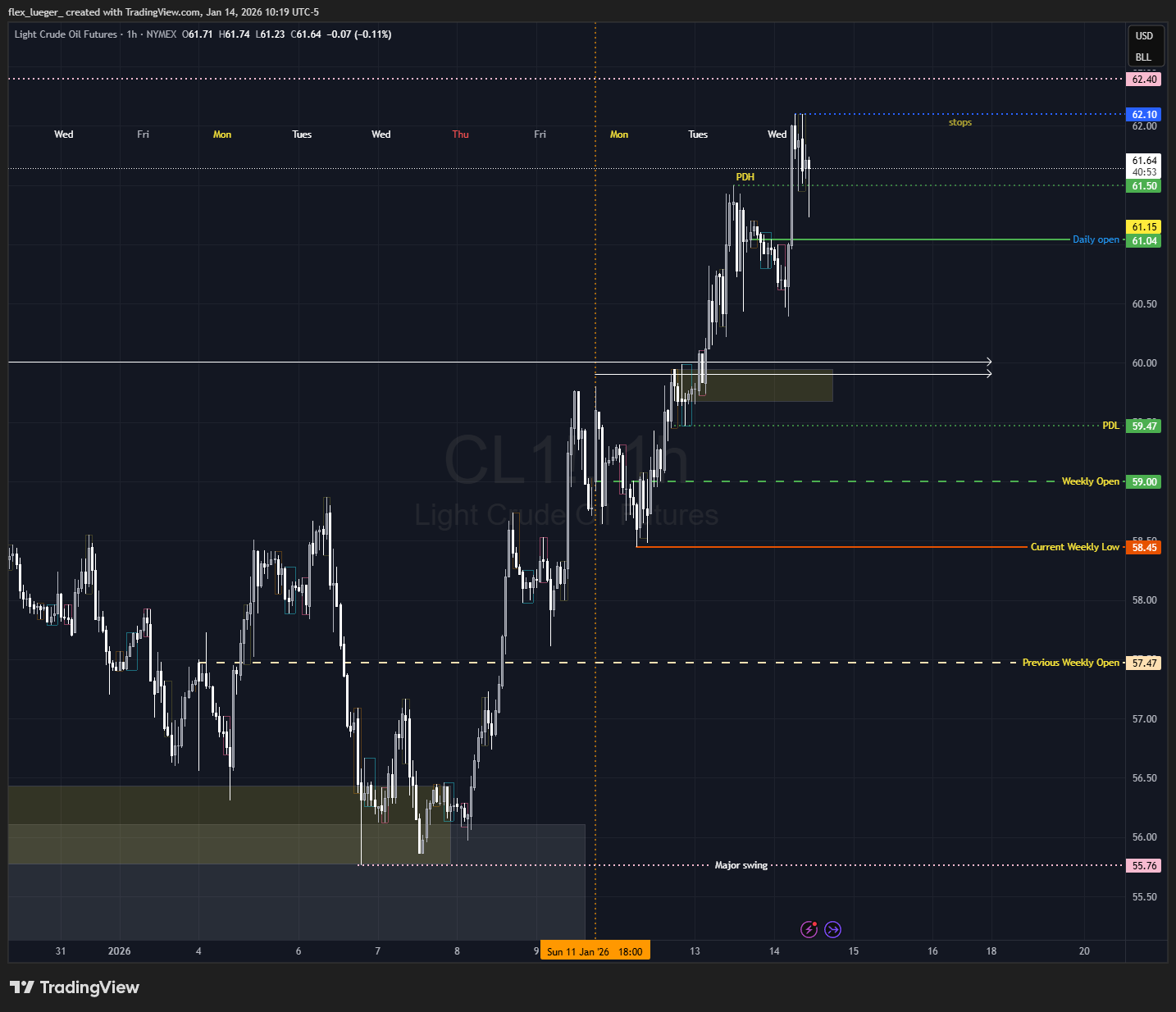
Oil Setup (Not Traded): Oil showed a clean markup move that caught my attention. I was looking for an entry at the $60.00 psychological level after an overnight retracement, but the setup never materialized during the New York session.
Risk Management
My risk management on the PUT spread worked as intended from a capital preservation standpoint - I secured a 2x return and avoided the time decay that would have eaten into profits. However, this conservative approach cost me additional upside when the market moved significantly in my favor days later.
The position sizing appeared appropriate for a 7 DTE options play, and I properly managed the emotional aspect by taking profits when the trade moved against me initially.
What Worked / What Didn't
What Worked:
- Market directional analysis was correct - the retracement into range played out exactly as anticipated
- Disciplined approach to not chase falling knives in a "drop base drop" environment
- Risk management kept losses minimal and secured profits when available
What Didn't Work:
- Premature position closure cost significant profits
- Failed to hold conviction in my original thesis when faced with short-term adverse movement
- Missed the oil entry opportunity due to waiting for a specific price level that never came
Lessons Learned
This marks the third time I've closed a weekly options position only to watch it run significantly in my favor days later. This pattern demands serious reflection and rule adjustment.
Key Questions I Need to Address:
- Should I default to holding positions longer in current market conditions?
- What specific data points can I use to distinguish between genuine reversal signals and temporary noise?
- How can I build more conviction in my original thesis to avoid premature exits?
Broader Market Observations: The simultaneous strength in gold, oil, USD, and equity markets creates an interesting dynamic. This "everything rally" often precedes significant market dislocations, raising the question: what's going to break first?
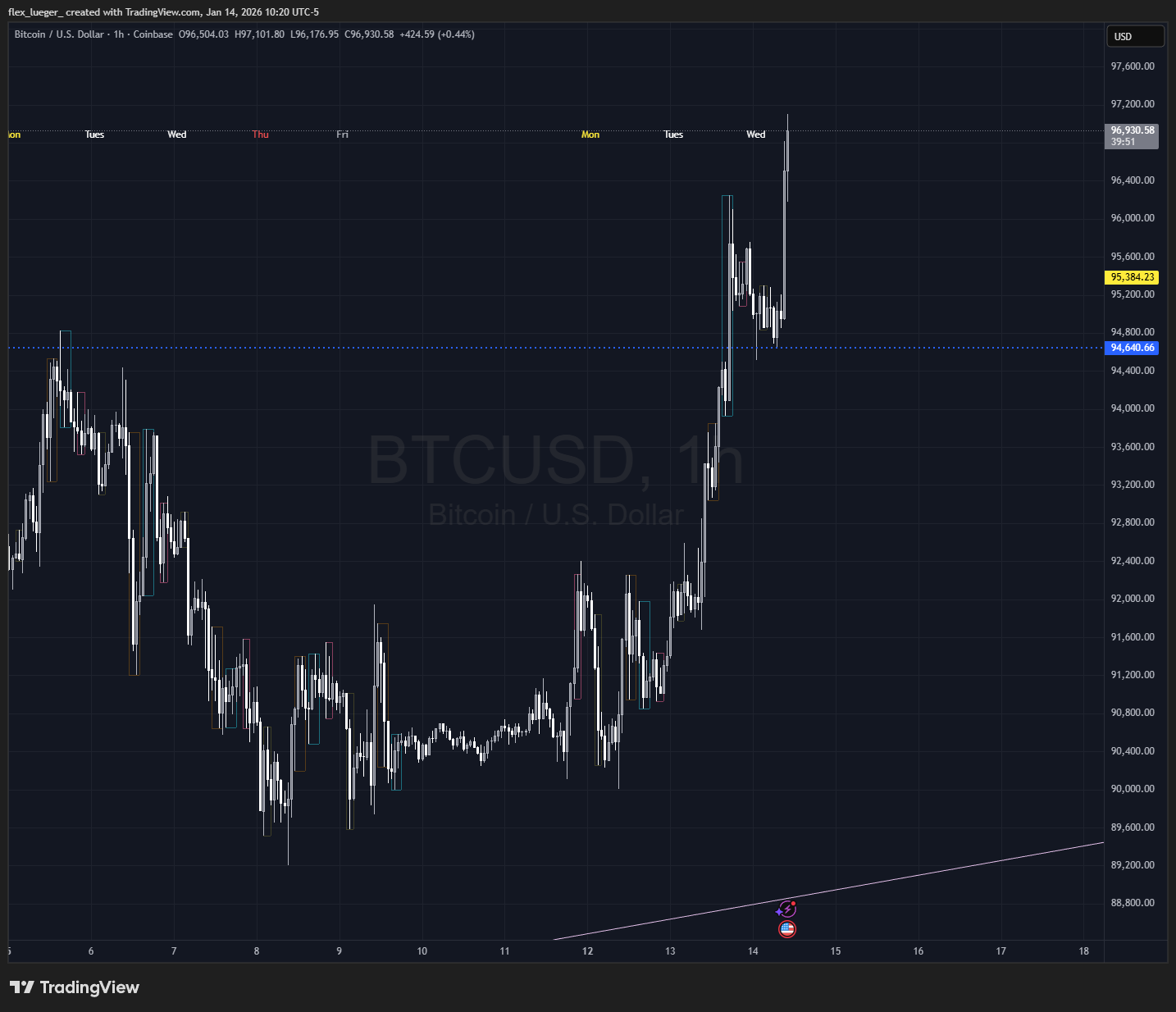
Bitcoin's push back toward $100k amid economic uncertainty and global liquidity concerns adds another layer of complexity to the current environment.
Rules for Future Trading:
- Develop clearer criteria for position management on weekly options beyond simple profit multiples
- Create a systematic approach to evaluate whether adverse movement represents thesis invalidation or temporary noise
- Consider partial position management rather than all-or-nothing exits
- Track patterns in my premature exits to identify emotional triggers
The market's behavior this week validated my analytical framework, but highlighted weaknesses in my execution and position management. The focus moving forward needs to be on developing more sophisticated holding criteria that balance risk management with profit maximization.