Day before PCE, OPEX, and GDP
Trading notes for 2026-02-19
By Sean WeldonTL;DR
The market formed a swing failure pattern overnight, unable to break the previous day's high, and found balance at VWAP and the weekly value area low. Despite expectations for a Thursday push higher, the market remained range-bound and closed at the weekly open, supported by high volume nodes at 6,860 and 6,880, keeping the thesis for a Friday afternoon short intact.
Market Context
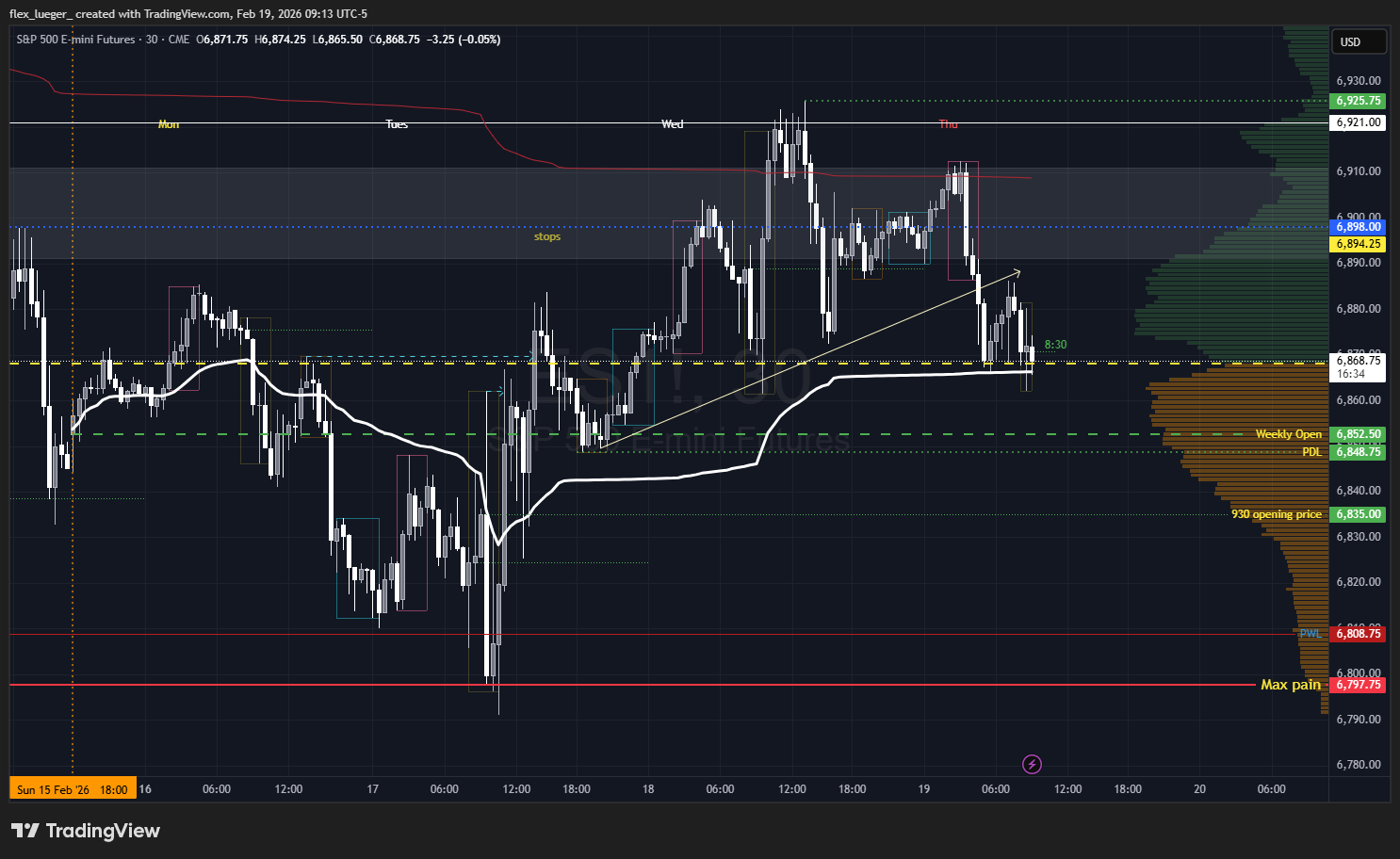
Overnight action showed a classic swing failure pattern where the market couldn't sustain momentum above the previous session's high. This created what I'm calling a "check mark" formation on the charts. The market found its footing right at two critical levels: VWAP and the previous week's value area low, suggesting these technical levels are holding significance for institutional participants.
The weekly open became a key battleground, with high volume nodes clustering around the 6,860 and 6,880 levels. This volume profile data suggests these prices represent fair value areas where both buyers and sellers are willing to transact, creating natural support zones.
Thesis & Plan
My initial thesis was built around the expectation that Thursday would see an expansion of the current range to the upside, potentially taking out Wednesday's high. However, I remained cautious about the 6,800 max pain level, which represents significant option flow implications.
The plan was structured around a two-day scenario:
- Thursday: Look for one more push higher to clear Wednesday's high
- Friday: Anticipate a reversal that would take out the recent lows and drive price toward the 6,800 max pain point
This thesis was based on typical options expiration week behavior, where we often see late-week moves toward max pain levels as market makers adjust their hedging positions.
Market Action
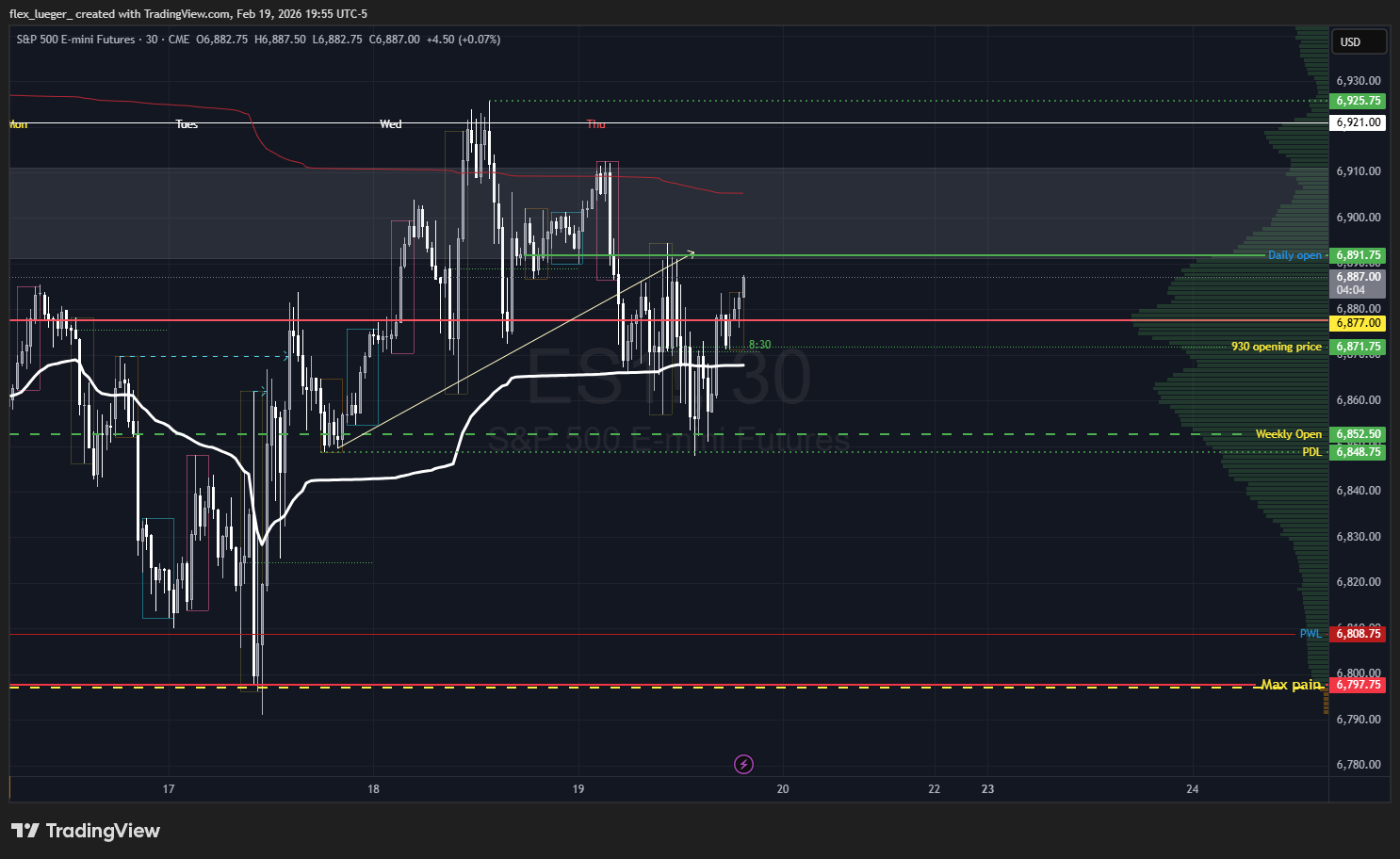
The 4:00 PM close revealed that the market had other plans. Instead of the anticipated upward expansion, price action remained largely contained within yesterday's range. The session was characterized by choppy, sideways movement that tested both bulls and bears without giving either side a decisive advantage.
The most significant development was the bounce off the weekly open, which demonstrated the importance of this psychological and technical level. The support from high volume nodes at 6,860 and 6,880 provided a floor for the session, preventing any meaningful downside follow-through from the morning's weakness.
What Worked
The identification of key support levels proved accurate. The weekly open, combined with the high volume nodes at 6,860 and 6,880, provided exactly the support I anticipated. The market's inability to break higher also aligned with the swing failure pattern observed in the overnight session.
The range-bound nature of the session actually supported my broader thesis. By not pushing significantly higher, the market maintained the technical setup for a potential Friday short opportunity. Sometimes the best trades come from patience, and Thursday's lack of upward momentum preserved the bearish setup I was monitoring.
What Didn't Work
My expectation for Thursday to "push the range higher" didn't materialize as anticipated. While I correctly identified the support levels, I overestimated the likelihood of an immediate upward expansion. The market chose consolidation over trending action, which is always a possibility that requires mental flexibility.
The timing component of my thesis proved premature. Markets don't always follow the neat two-day scenarios we envision, and Thursday served as a reminder that consolidation phases can extend longer than expected.
Lessons Learned
This session reinforced several important trading principles:
Volume Profile Matters: The high volume nodes at 6,860 and 6,880 provided reliable support exactly as the data suggested. This confirms the importance of incorporating volume analysis into level identification, as these areas represent genuine institutional interest rather than arbitrary technical lines.
Swing Failures Create Opportunities: The overnight swing failure pattern set up the entire day's range-bound action. Recognizing these patterns early provides context for the entire session and helps set realistic expectations for directional moves.
Patience Preserves Setups: While Thursday didn't deliver the expected upward expansion, the lack of momentum actually preserved my bearish thesis for Friday. Sometimes the best trading days are the ones where you don't force trades and allow setups to mature.
Max Pain Levels Deserve Respect: The 6,800 max pain point continues to exert gravitational pull on price action. Options flow analysis remains a valuable component of market structure understanding, especially during expiration weeks.
The key takeaway is that successful trading often requires adapting expectations while maintaining core thesis elements. Thursday's range-bound action didn't invalidate the broader setup – it simply extended the timeline for the anticipated move toward max pain levels.