Day before fed rate announcement
Trading notes for 2026-01-27
By Sean WeldonTL;DR
Witnessed a significant dollar devaluation move ahead of Fed rate announcement, with gold leading the charge and DXY following. Despite recognizing the trend and being positioned in long 6E options, I exited prematurely and missed a substantial move that I had correctly anticipated.
Market Context
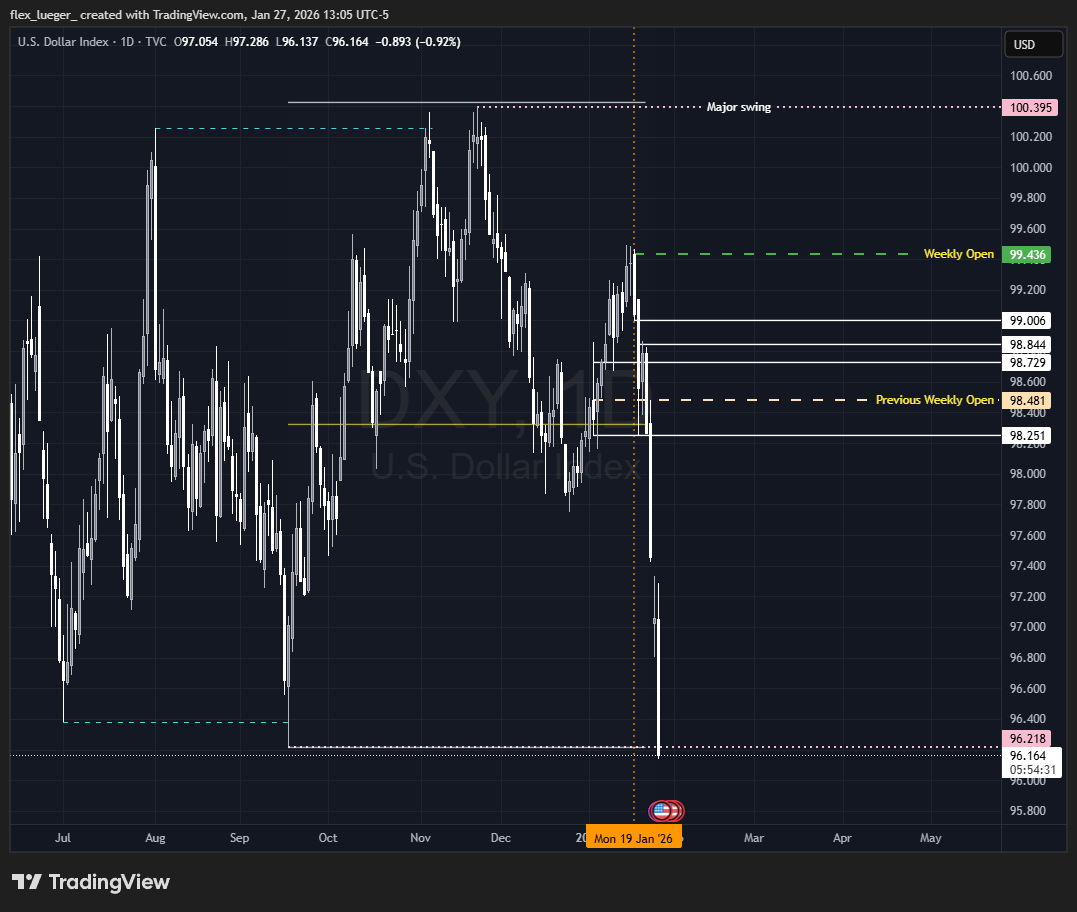
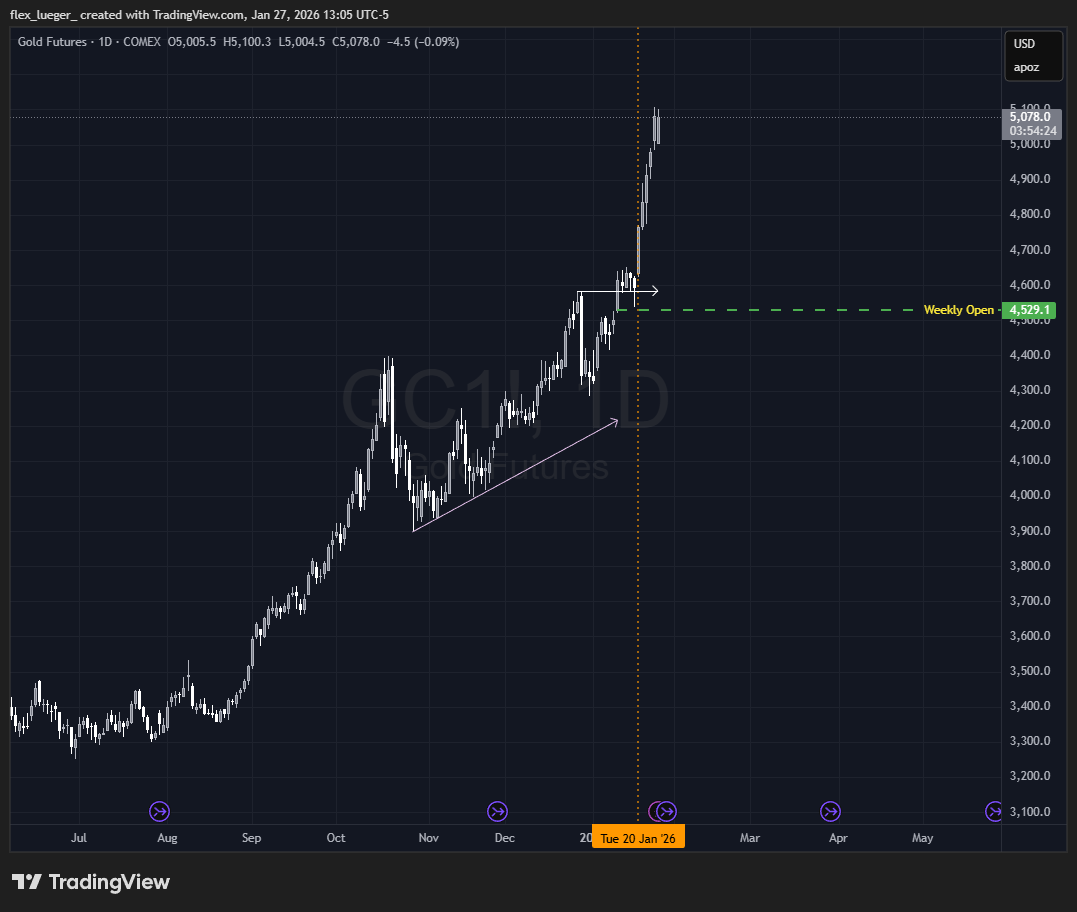
The day before the Fed rate announcement delivered some incredible price action. The dollar experienced a sharp move to the downside, with what appeared to be coordinated selling across DXY. Gold was first to the races, breaking higher before the dollar index caught up with the downside momentum. This looked like a deliberate move to devalue the dollar, potentially aimed at pushing investors out of bonds and into risk-on assets ahead of the Fed decision.
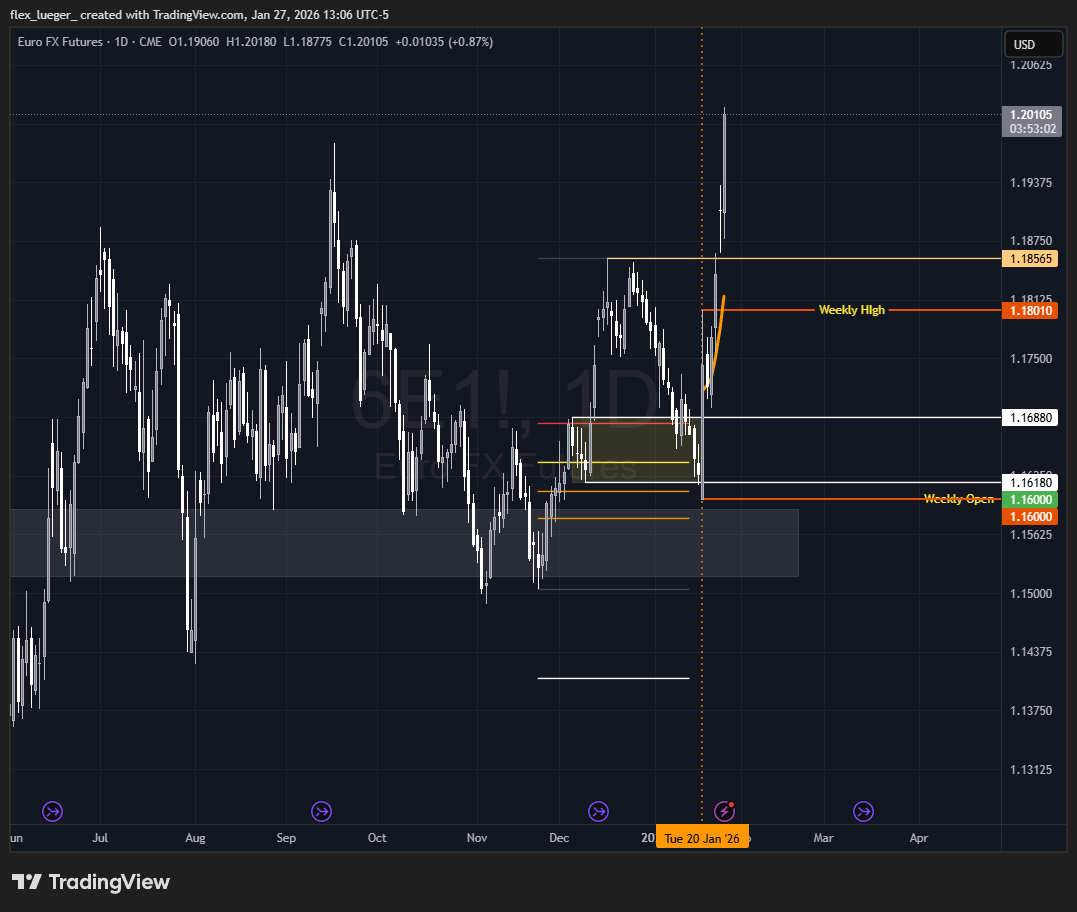
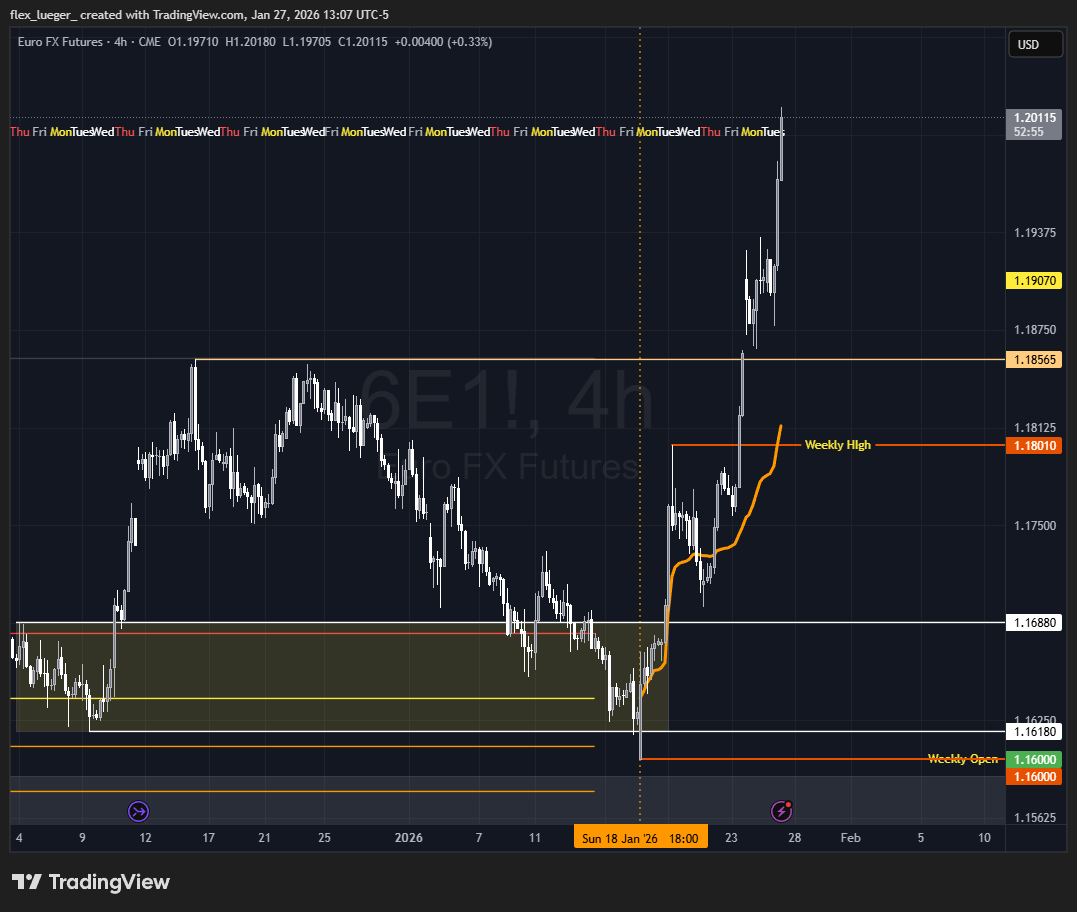
The euro was also a major beneficiary of this dollar weakness, showing strong upside momentum as the greenback sold off.
Thesis & Plan
My thesis was spot on - I recognized that this was setting up to be one of those meaningful trend moves that we constantly scan for in the markets. The pattern seemed familiar, and I had positioned myself accordingly with long 6E (Euro futures) options to capitalize on the expected euro strength against the weakening dollar.
The setup had all the hallmarks of a high-probability move: clear fundamental catalyst (Fed meeting), technical pattern recognition, and multiple confirming assets (gold leading, DXY following).
Entries & Exits
I had entered long 6E options ahead of the move, correctly anticipating the euro strength that would come from dollar weakness. However, despite being right about the direction and having the proper positioning, I made the critical error of exiting my position too early.
This was a classic case of shaking myself out of a winning trade. The move I had anticipated was unfolding exactly as expected, but I lacked the conviction to hold through what turned out to be a substantial trending move.
What Worked
Several things went right in this trade setup:
- Pattern recognition: I correctly identified that this was shaping up to be one of those significant trend moves we constantly look for
- Positioning: I had the right instrument (6E options) to capitalize on euro strength
- Market read: My interpretation of the dollar devaluation strategy was accurate
- Timing: I was positioned ahead of the major move
The fundamental analysis was sound. Recognizing that this appeared to be a coordinated effort to weaken the dollar and push capital into risk assets showed good market intuition.
What Didn't Work
The execution was the major failure point:
- Premature exit: Despite being right about everything else, I exited the position too early
- Lack of conviction: I didn't trust my own analysis enough to ride the trend
- Self-sabotage: I "shook myself out" of what should have been a profitable trade
This represents a pattern I need to break - having the right idea and setup, but failing to execute properly when the market moves in my favor.
Lessons Learned
This trade delivered a crucial lesson that I need to internalize: follow your instincts when the chart tells you a pattern is repeating.
The key takeaways from this experience:
- Trust the process: When I do the analysis and recognize a high-probability setup, I need to have the conviction to see it through
- Trend following discipline: These are exactly the types of moves that make trading profitable - I can't afford to cut them short
- Experience over fear: Only time and experience will teach me to hold positions when I've correctly identified a trending move
- Pattern recognition pays: My ability to spot the repeating pattern was correct - I need to have more confidence in this skill
The most frustrating part is that I had everything right except the most important element: staying in the trade. This move represented exactly what I spend my time looking for - a clear, trending move with strong fundamentals behind it. Missing out on the profits after correctly calling the setup is a expensive lesson in the importance of execution discipline.
Moving forward, I need to develop better rules around position management when I'm in trending moves. Perhaps setting clearer criteria for what constitutes a trend change, or using trailing stops instead of flat exits when I identify these high-conviction setups.
The market gave me exactly what I was looking for, and I gave it back through poor execution. That's a mistake I can't afford to repeat.