3 Red weeks of BTC
Trading notes for 2026-02-05
By Sean WeldonTL;DR
Bitcoin and crypto markets are experiencing their third consecutive week of heavy selling since January 19th, mirroring the brutal 2021 bear market pattern. I'm positioning short with put ladders and futures trades, expecting any bounces to be sold into continuation moves lower.
Market Context
The crypto market has been absolutely brutal since January 19th, delivering three straight weeks of large red candles that are wiping out participants across the board. This price action is giving me serious déjà vu from 2021, when Bitcoin just kept grinding lower week after week with relentless selling pressure and virtually no meaningful bounces.
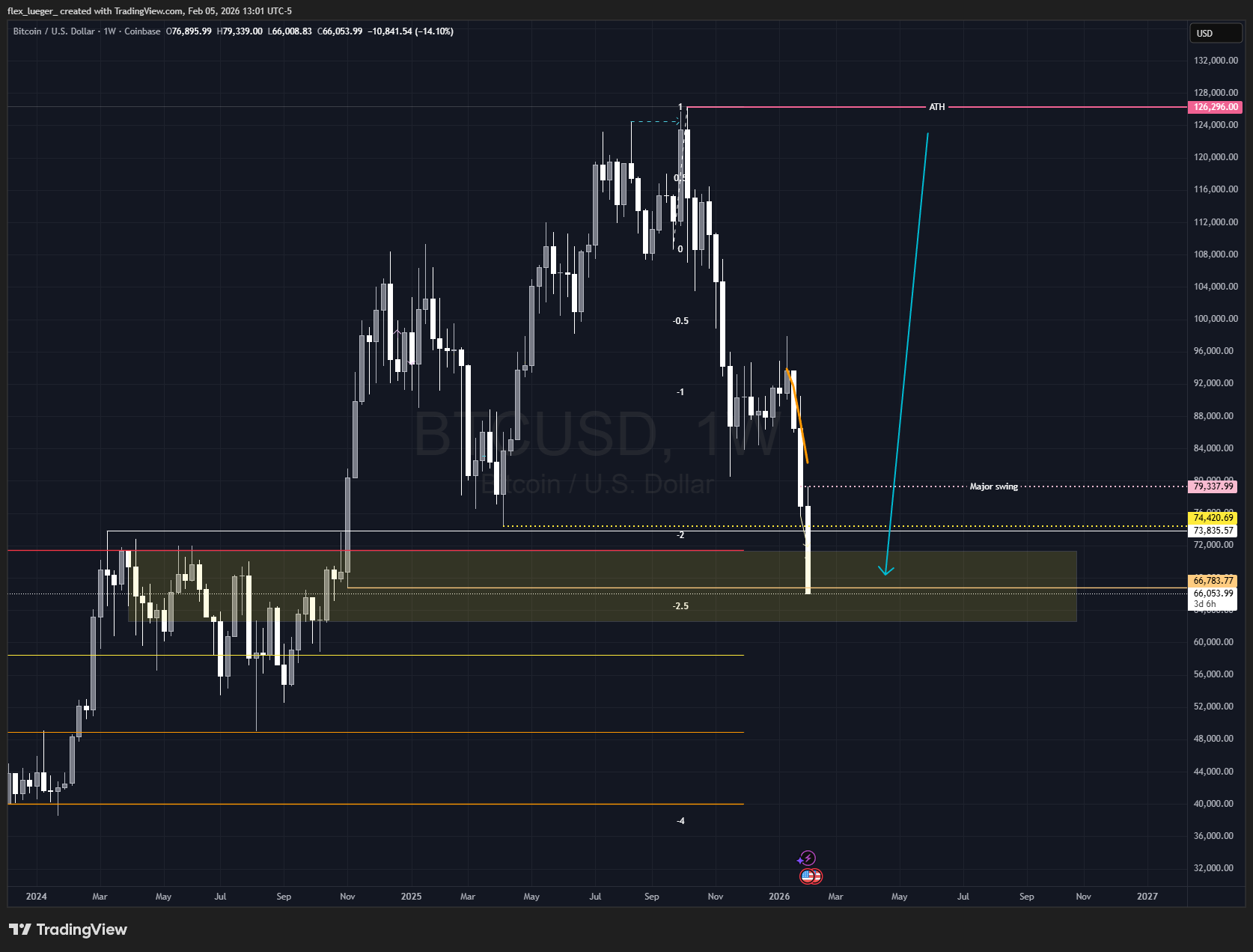
When I zoom out to the weekly timeframe, the similarities to the 2021 bear market become even more apparent. The consistent pattern of large weekly candles to the downside with minimal relief rallies is playing out almost identically.
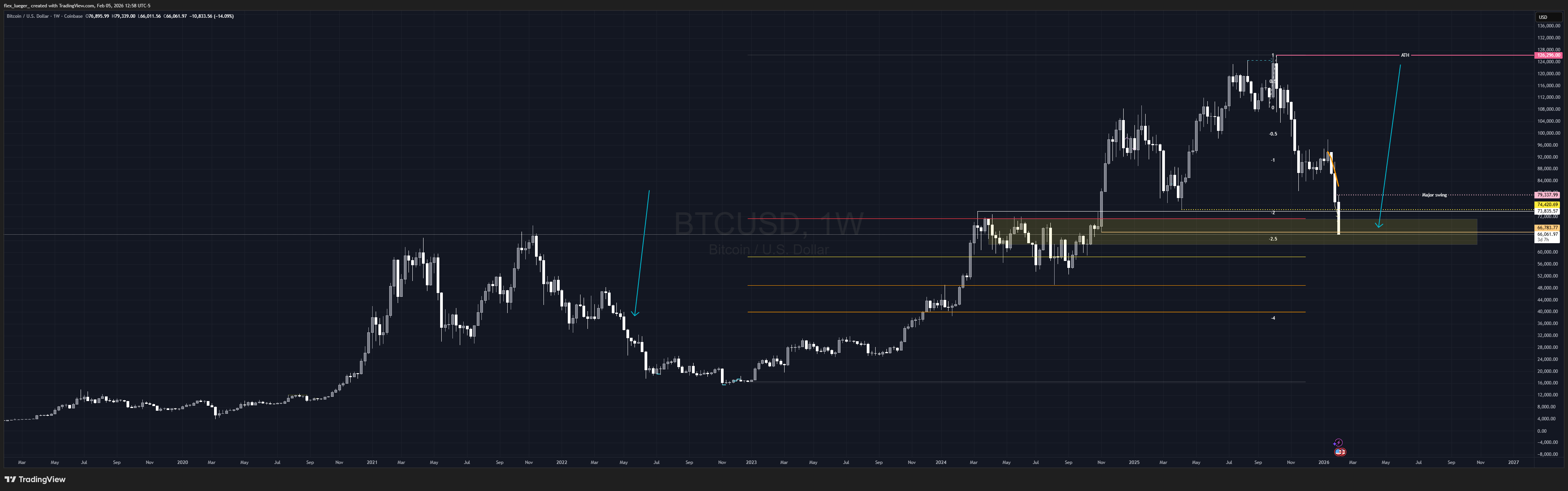
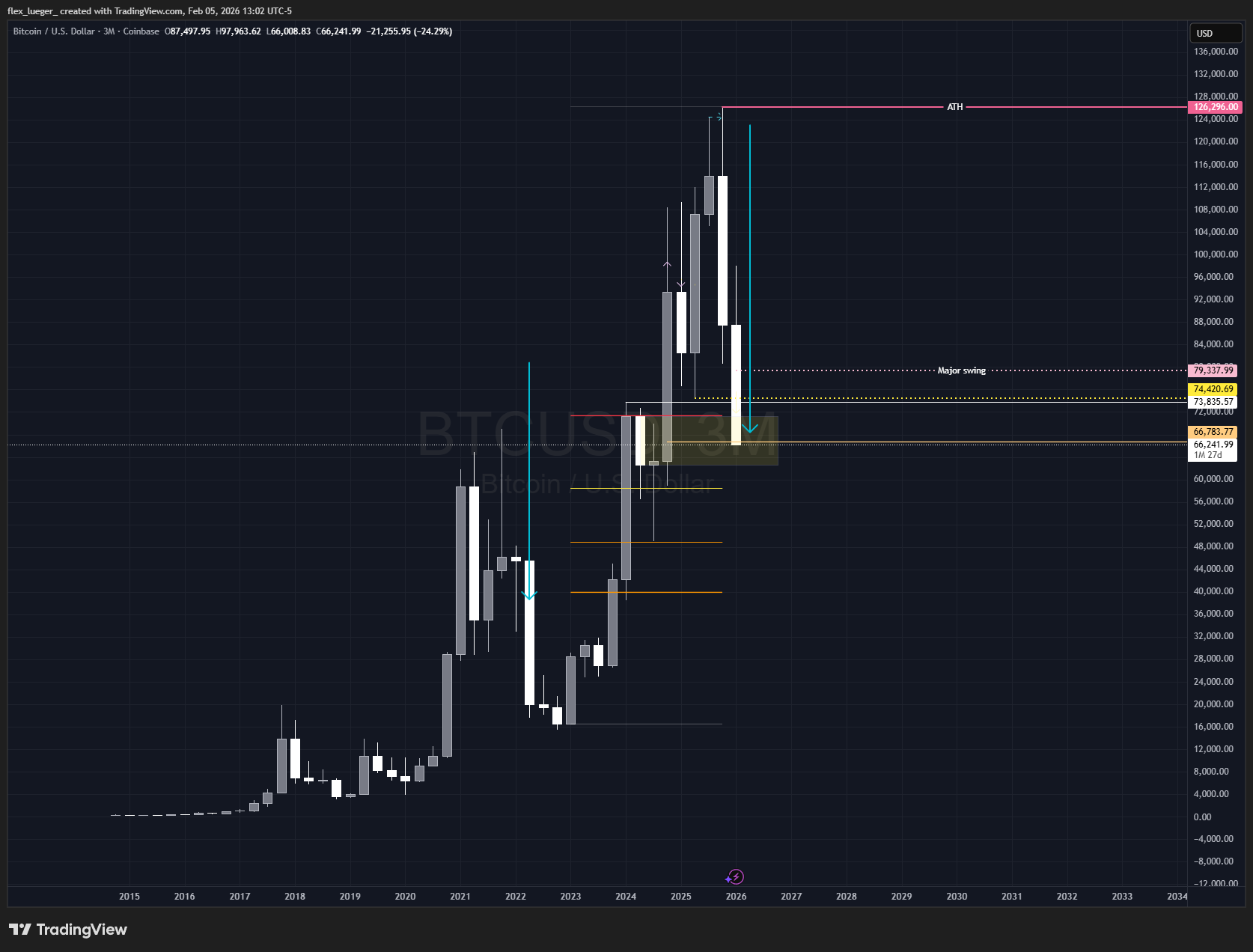
This market behavior is reinforcing an important lesson for me: patterns repeat, and higher timeframe analysis is crucial. Looking at the weekly and quarterly (3M) charts provides much better context than getting caught up in daily noise.
Thesis & Plan
Given the clear bearish momentum and historical precedent from 2021, my thesis is straightforward: this downtrend has more room to run, and any bounces should be viewed as selling opportunities rather than reversal signals.
My plan is to short after any up-close days or retracements. The market has shown it's willing to crush rallies quickly, so I want to position myself to benefit from continuation moves lower while managing risk through proper position sizing and timing.
Entries & Exits
I've implemented a multi-layered approach to capitalize on this bearish environment:
Options Strategy: I established a hedge position using put ladders with different days to expiration (DTE), all positioned at 0.08 delta. This gives me downside exposure across multiple time horizons while managing premium decay risk.
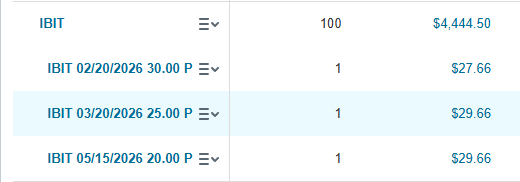
I'm also considering converting this into a modern collar structure by selling call spreads above current levels, which would help finance the position while capping upside risk.
Futures Trade: When I spotted a quick retracement higher during my market evaluation, I entered a short position on /MES (micro E-mini S&P 500 futures). The timing worked out well as I caught what appeared to be a dead cat bounce.
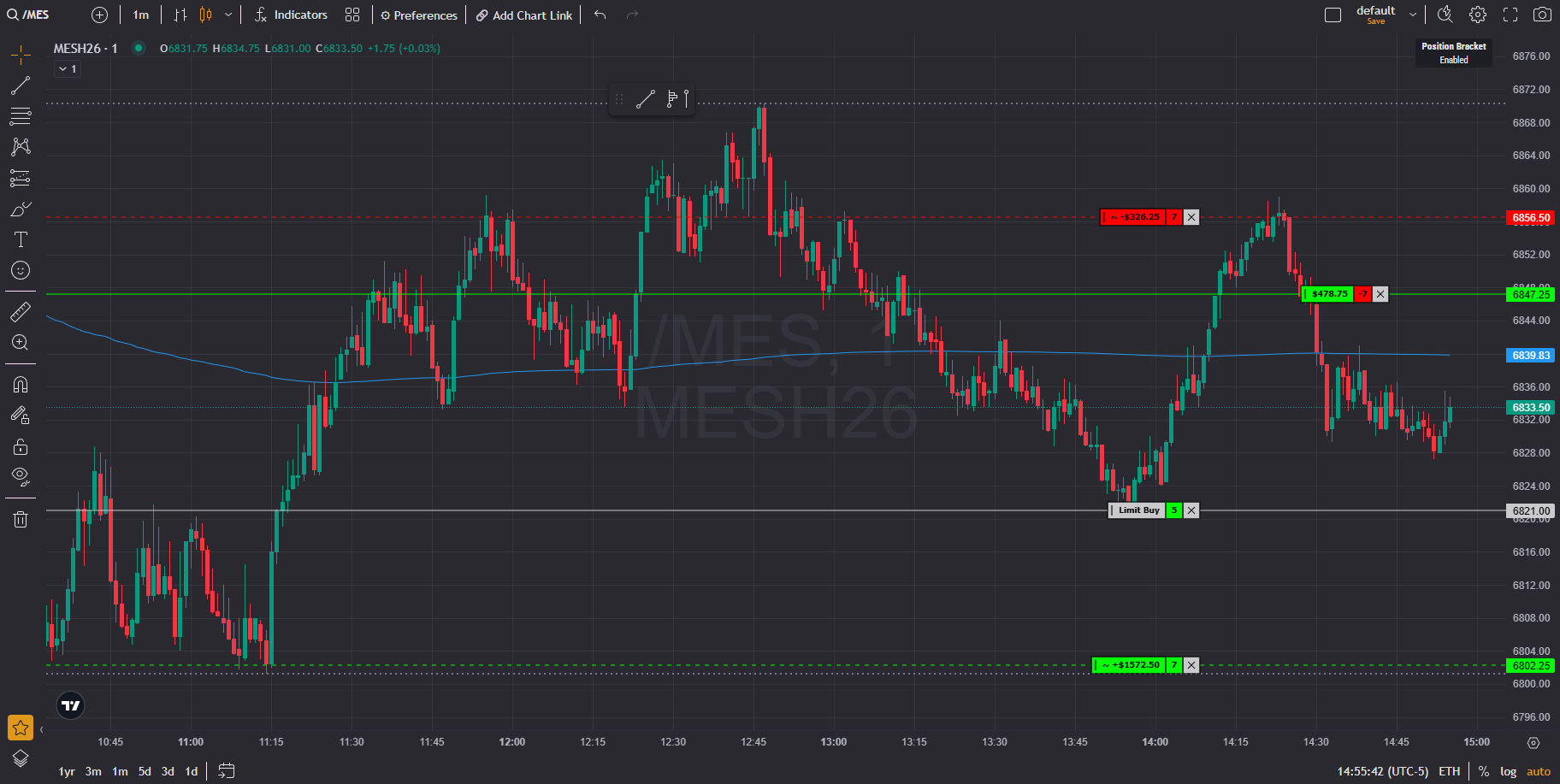
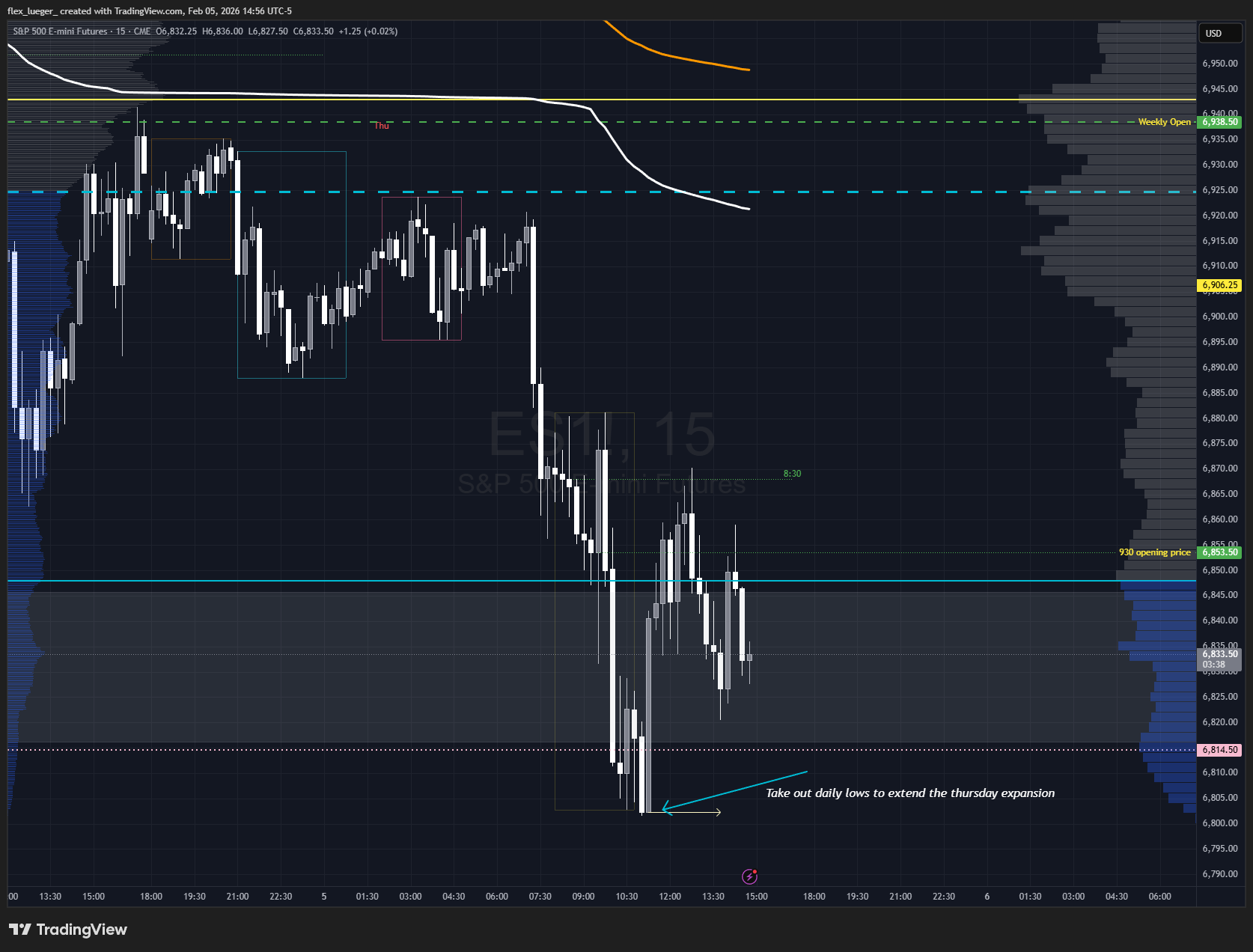
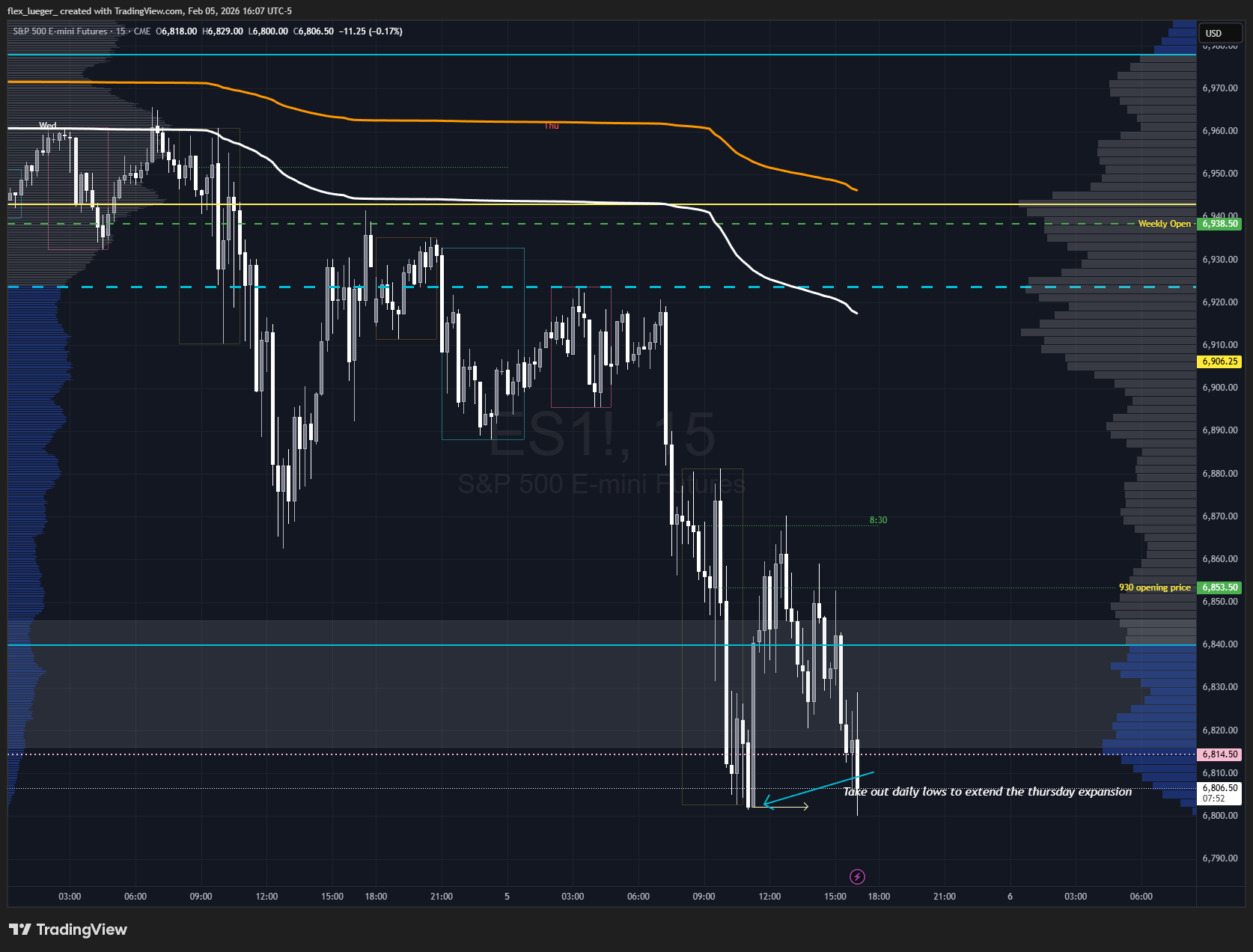
I held the short position into the post-market session and ended the day with profits on the futures trade.

Risk Management
My risk management approach focuses on diversification across instruments and time frames:
- Put ladders at 0.08 delta: This positioning gives me meaningful exposure to downside moves while avoiding the high premium and rapid decay of at-the-money options
- Multiple DTEs: Spreading expiration dates helps manage theta decay and gives me flexibility to roll or adjust positions
- Futures sizing: Using micro contracts allows for precise position sizing without over-leveraging
The potential collar structure would add another layer of risk control by generating premium income from the call spreads to offset some of the put costs.
What Worked
Several elements of my approach proved effective:
- Higher timeframe analysis: Zooming out to weekly and quarterly charts provided crucial context that daily charts missed
- Pattern recognition: Identifying the similarity to 2021's bear market helped frame expectations and positioning
- Timing entries on bounces: Waiting for retracements before entering shorts improved my entry points
- Multi-instrument approach: Using both options and futures provided different risk/reward profiles
What Didn't
While the day was profitable, there are areas for improvement:
- Position sizing: I could have been more aggressive given the clear technical setup and historical precedent
- Execution timing: Some of my entries could have been better timed within the day's price action
Lessons Learned
This trading session reinforced several important principles:
Patterns repeat across market cycles. The 2021 bear market playbook is providing a roadmap for the current environment. While markets don't repeat exactly, they often rhyme, and recognizing these patterns can provide significant trading edges.
Higher timeframe analysis is essential. Getting caught up in daily fluctuations can cause you to miss the bigger picture. The weekly and quarterly charts are telling a much clearer story than the noise on shorter timeframes.
Sell the rips in bear markets. When a market is in a clear downtrend with strong momentum, bounces should be viewed as selling opportunities rather than potential reversals. This mindset shift is crucial for positioning correctly.
Diversify your approach. Using multiple instruments (options and futures) with different risk/reward profiles allows for more nuanced positioning and better risk management.
Stay flexible with structures. The ability to convert the put position into a collar by adding call spreads shows the importance of keeping options open and adapting strategies as opportunities present themselves.
The key moving forward is maintaining discipline around this bearish thesis while staying alert for signs that the pattern might be breaking down. For now, the 2021 playbook appears to be the dominant script, and I plan to keep positioning accordingly.