Failed Day 2 Continuation: Shorting the Distribution at 6,800
Trading notes for 2026-03-17
By Sean WeldonTL;DR — Pre-market looked like textbook day 2 continuation, but multiple structural red flags emerged: buy-side imbalances only, red delta on breakout candle, and CVD divergence at highs. Shorted 6,800 and rode the distribution back toward VWAP at 6,770-6,775.
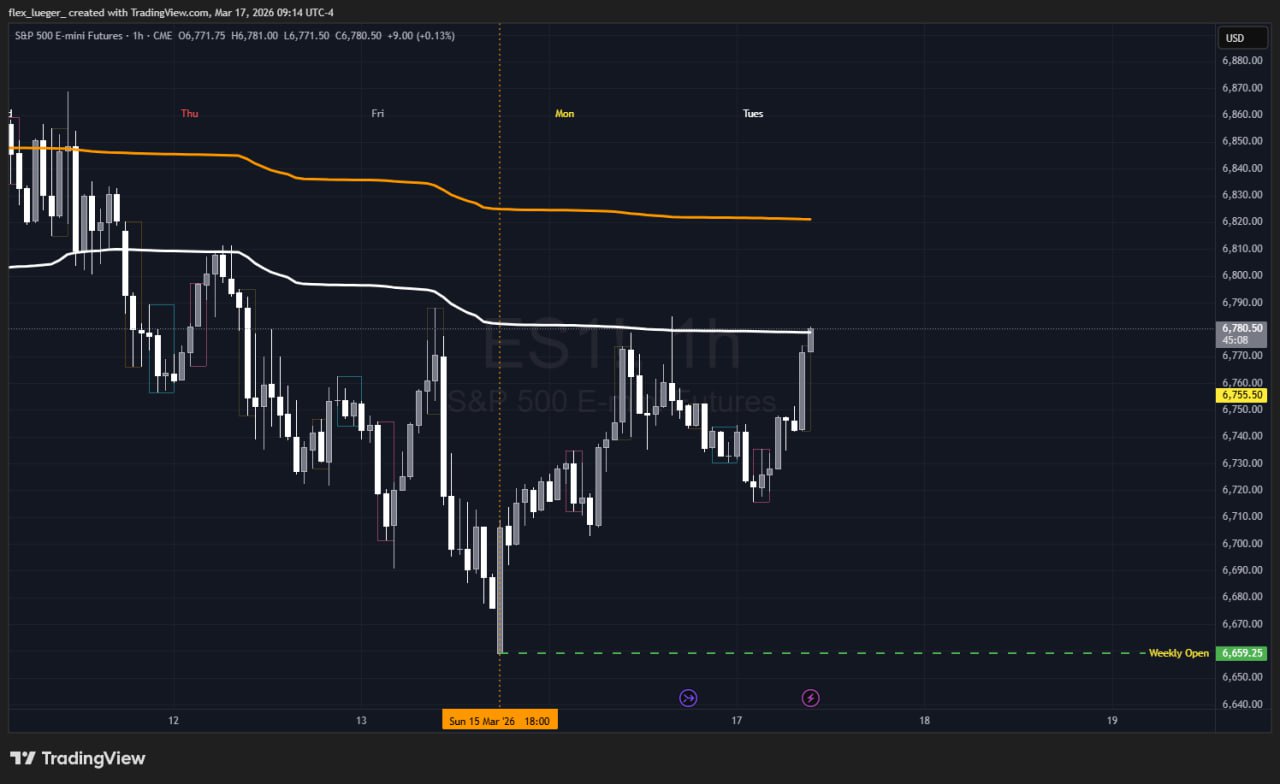
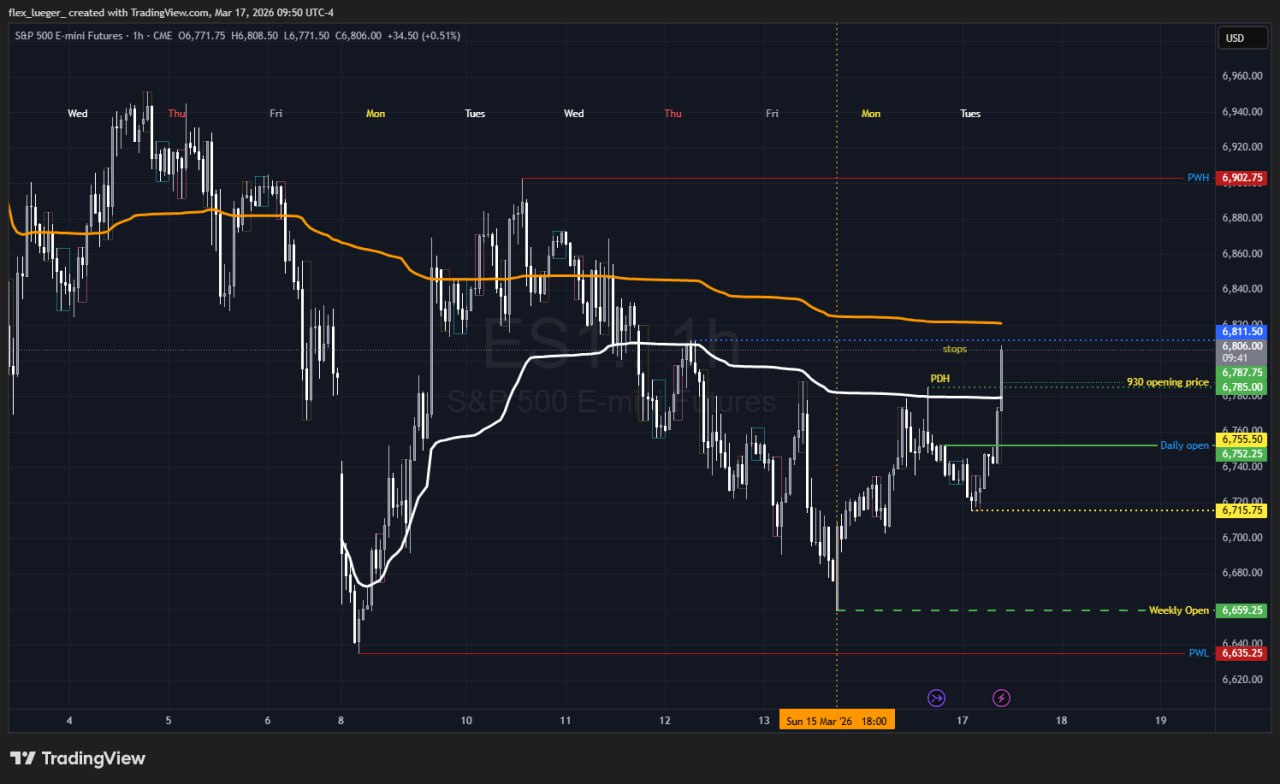
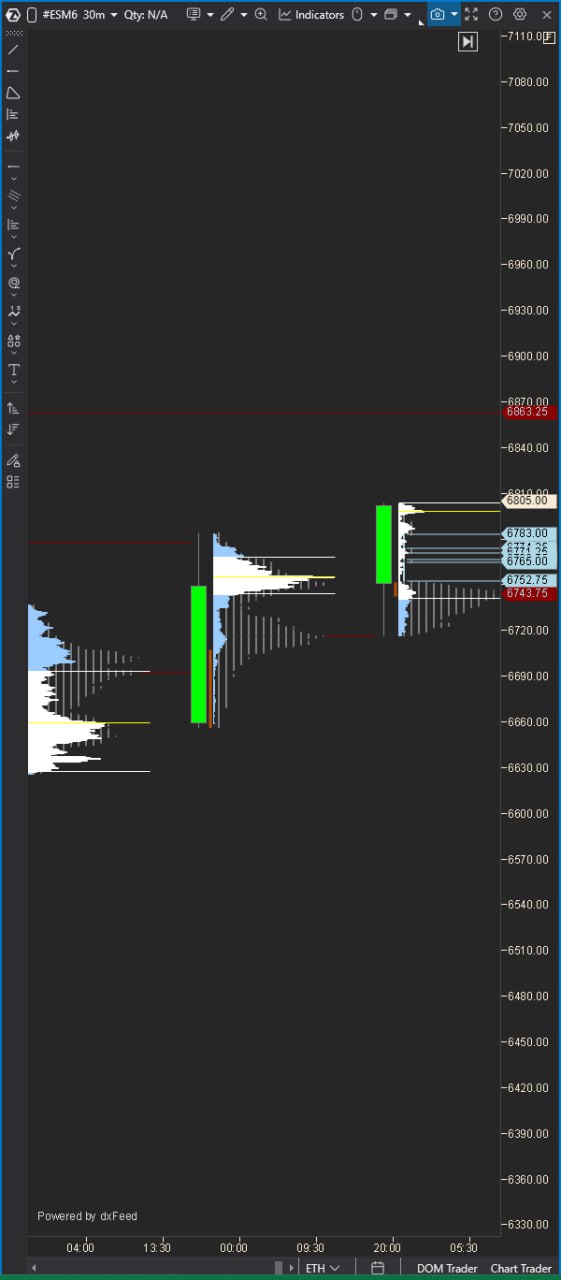
Market Context — ES pulled back overnight from the prior session's highs around 6,785, dropping to test the weekly open at 6,659.25 before recovering. The overnight session showed a clean rejection tail at lows, holding support well above 6,665. By pre-market, price had recovered the entire move, testing back into yesterday's value area at the highs. The market profile from the prior session showed value built at 6,780-6,785, which suggested institutional acceptance at those levels. Daily open sat at 6,752, with prior day high at 6,784.75. The setup looked like a classic day 2 continuation pattern—overnight pullback holds key support, then retests highs.
Thesis & Plan — Initial thesis was bullish continuation. The overnight pullback held well above the weekly open, showing buyers stepping in at lower prices. The recovery back to 6,780-6,785 suggested we'd test whether the market could break and hold above prior day high, potentially targeting 6,800+ and the orange moving average around 6,830. The plan was to watch for acceptance above 6,785 during RTH with volume confirmation. If we cleared 6,800 with positive CVD, that would confirm initiative buying and validate continuation toward 6,830-6,850.
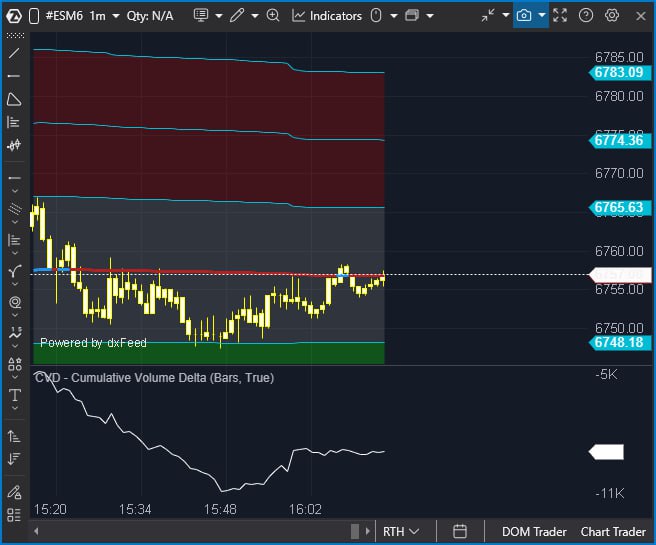
But the pre-market action raised concerns. Price took out the weekly high before 9:30 AM without building any balance or consolidation at the breakout level. This violated the pattern of "poor extremes getting repaired during continuation"—there was no cause building, just a straight shot back to highs. That's often a stop run or short covering, not real institutional buying.
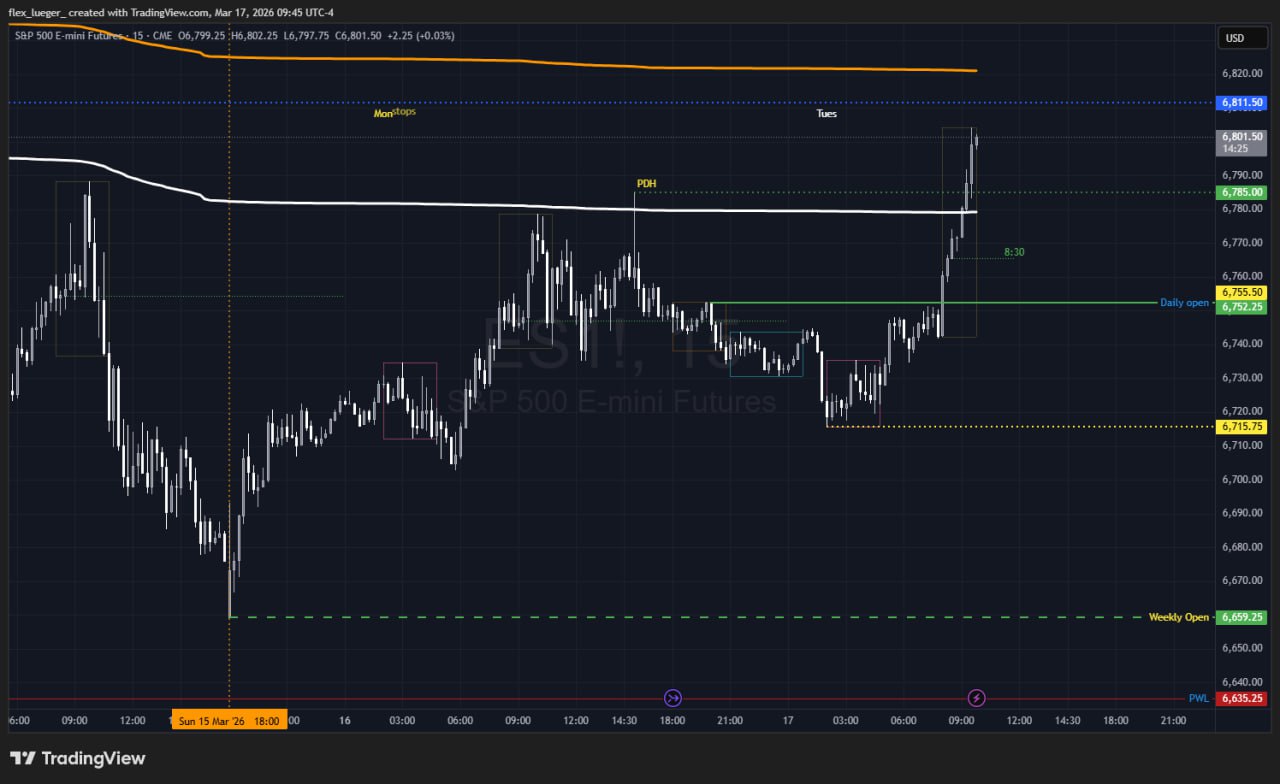
Entries & Exits — As RTH opened at 9:30 AM, price spiked from 6,788 to 6,816 in the first few minutes. The 1-minute chart showed aggressive buying initially, but CVD told a different story. While price extended higher, CVD made a lower high after the initial spike—classic bearish divergence. This meant sellers were hitting the rally even as price pushed to new highs.
The 5-minute chart across the ETH (extended trading hours) session showed the full picture: the rally from 6,720 to 6,808 had accumulated +5K in cumulative CVD, but the entire move was built on buy-side imbalances only. There were no sell-side absorption points along the way—no fair value established at lower prices. The market profile showed orange ovals marking consolidation zones at 6,775 and 6,763, but these were isolated. The bulk of the move lacked two-way institutional flow.
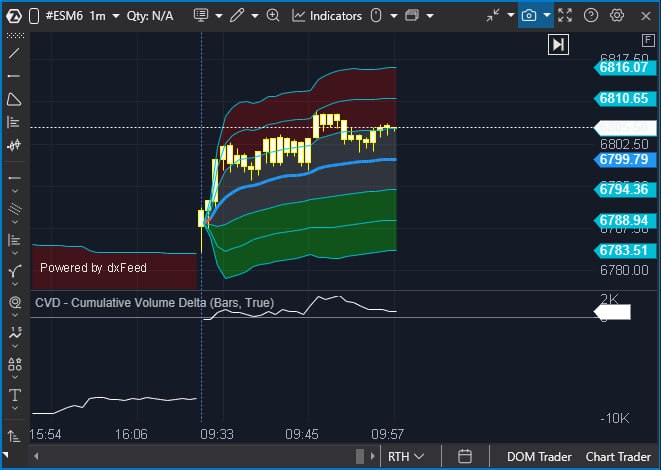
By 10:00 AM, price was testing 6,800 again with sell-side imbalances forming at the highs. This was the signal: institutions were distributing into the rally. I shorted at 6,800, targeting daily VWAP around 6,770-6,775. The CVD had dropped 7,000 points from its peak while price stayed elevated—a massive divergence that created a structural gap. Price would need to fill down to where CVD reached zero.
Partial profit was taken around 6,799 on the initial move lower. Stop was placed at 6,810, above the recent high. The trade scratched briefly as price retested 6,796, bouncing off 6,780 (the old prior day high). For a moment, it looked like day 2 continuation might win—6,780 held as support (classic support flip), and delta turned green on the bounce.
But then the critical observation: CVD had dropped to zero while price was still at 6,795-6,800. Price wasn't reaching the level where CVD hit zero (around 6,770-6,775). This created a magnet effect—the market was structurally unbalanced and would gravitate toward that level. When price broke the RTH low, that confirmed the distribution thesis. Initial buyers from the 9:30 open were now underwater, stops were triggered, and the path to VWAP cleared.
Risk Management — The stop at 6,810 was critical. If price reclaimed 6,805 and held, the distribution thesis would have failed and I'd need to cover and potentially flip long for continuation. As price retested the entry at 6,796, I tightened the stop to 6,805 rather than letting it stay at 6,810. The green delta on the bounce was a warning—short covering could push back to highs.
Position sizing was moderate, not full conviction, because the debate was real: strong trend structure (+5K CVD, recovery from lows) versus suspect breakout quality (red delta on breakout candle, no balance building, pre-market takeout). That tension kept size in check until confirmation.
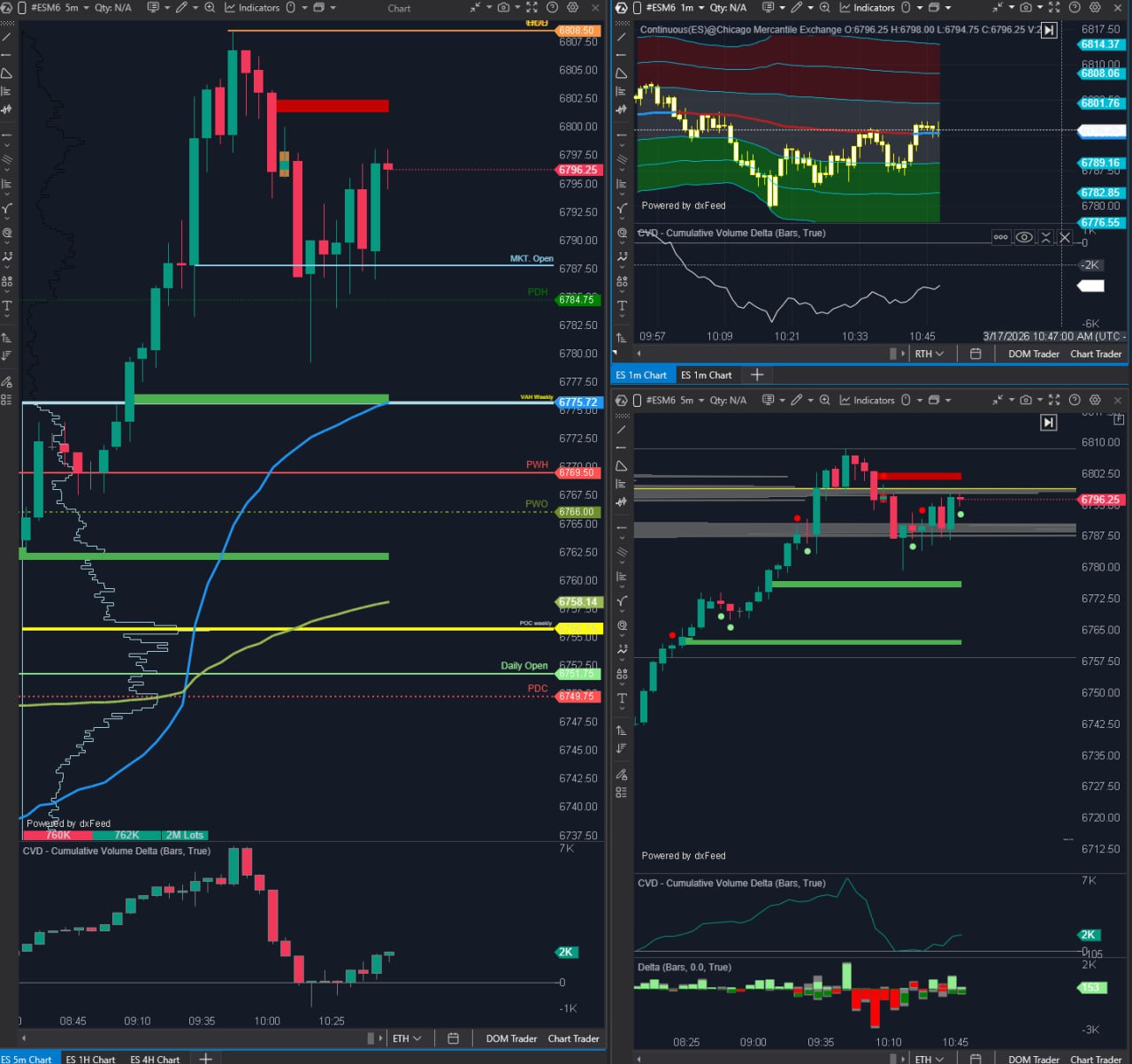
When RTH low broke and CVD stayed near zero, I moved the stop to breakeven at 6,800 to lock in profit. At that point, the thesis was confirmed and risk was off the table. The target remained daily VWAP at 6,770-6,775, with potential extension to 6,750-6,760 if momentum continued.
What Worked / What Didn't — The structural analysis worked perfectly. Recognizing the buy-side imbalances only, the red delta on the breakout candle, and the CVD divergence gave me edge before price confirmed the move. The pre-market concern about taking out highs without balance was spot-on—that's often a trap, not a true breakout.
The multi-timeframe analysis was critical. The ETH session 5-minute chart showed the full rally context, the 1-minute RTH chart exposed the CVD divergence at the open, and the 15-minute chart confirmed value wasn't migrating higher despite the price move. Using market profile to track whether POC was building at highs or drifting lower helped assess conviction.
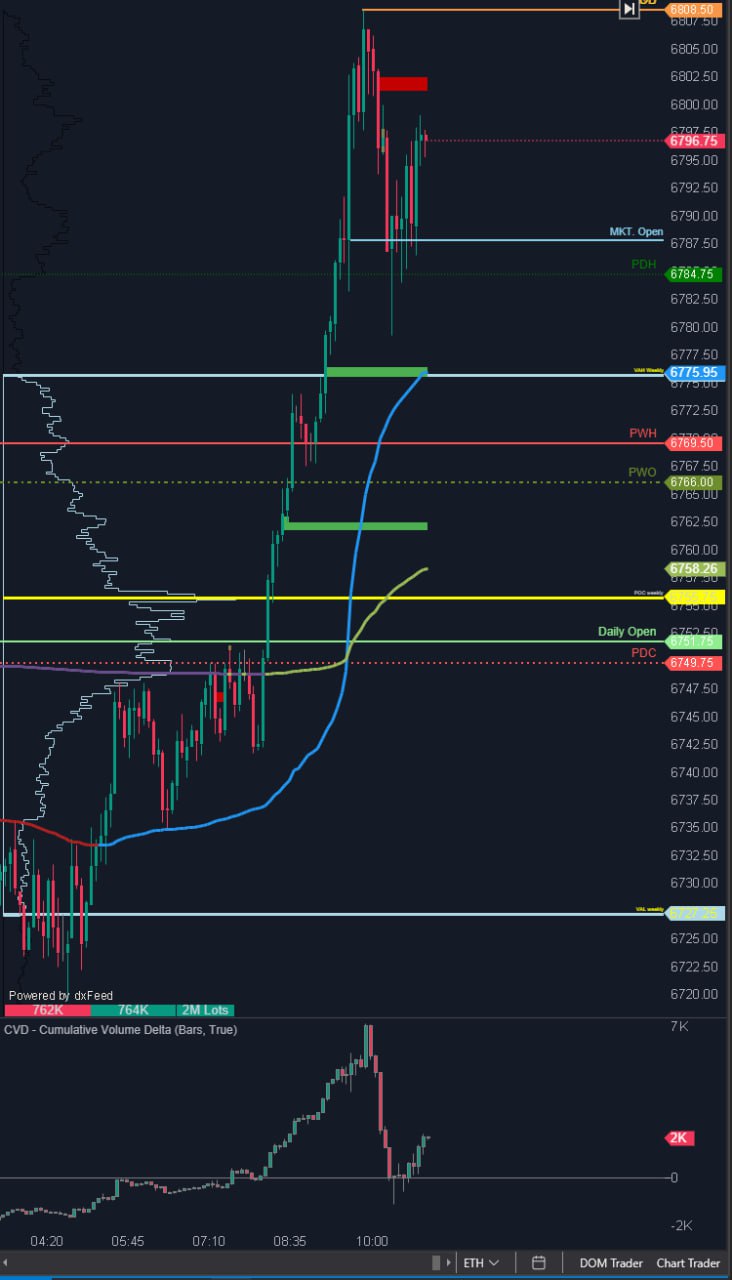
What didn't work initially was second-guessing the thesis when price bounced off 6,780. The green delta on the retest created doubt—was this continuation winning? The key was recognizing that green delta was short covering, not real buying, because CVD stayed near zero. The price-to-CVD gap was the anchor that kept conviction in the short.
The other challenge was the asymmetry question: if CVD rose 7K on the way up and fell 7K on the way down, why was it still bearish? The answer is in the character of the moves. The buying was impulsive, hitting thin offers above market (one-way buying). The selling was absorptive, gradual distribution into limit orders (grinding). Institutions don't dump aggressively—they sell slowly to avoid moving price. The CVD=0 level while price stayed elevated created the structural imbalance that demanded mean reversion.
Lessons Learned — Pre-market breakouts without balance building are traps until RTH confirms them. The market showing its hand too easily is a warning sign. If it looks too clean, there's usually something underneath.
CVD divergence is a primary signal, not a secondary one. When price extends but CVD declines, that's institutions selling into the rally. It doesn't matter if the move looks bullish on the surface—the delta tells the truth.
Buy-side imbalances only create unsustainable structure. Healthy trends have both buying and selling imbalances that establish fair value. One-way moves are short squeezes or retail chasing, not institutional conviction. When I see a rally without sell-side absorption points, the default bias should be fade, not follow.
The CVD=0 level becoming a magnet is a structural principle. When CVD drops to zero while price stays elevated, that gap must fill. Price will gravitate to the level where CVD hit zero because that's where the market is balanced. This doesn't require more selling—just absence of buying.
RTH low breaks after failed continuation attempts are high-probability signals. When initial buyers from the open get underwater and stops trigger, momentum shifts fast. The key is positioning before that break happens, not chasing after.
Finally, multi-timeframe confirmation reduces edge uncertainty. When ETH structure, RTH CVD, market profile POC, and intraday delta all align, conviction can increase. When they conflict (like bullish price action with bearish CVD), reduce size and wait for resolution. The debate between bull and bear cases isn't weakness—it's honesty about probability.