10-20-25-week-2-day-1-trending-day
Trading notes for 2025-10-20
By Sean WeldonTL;DR
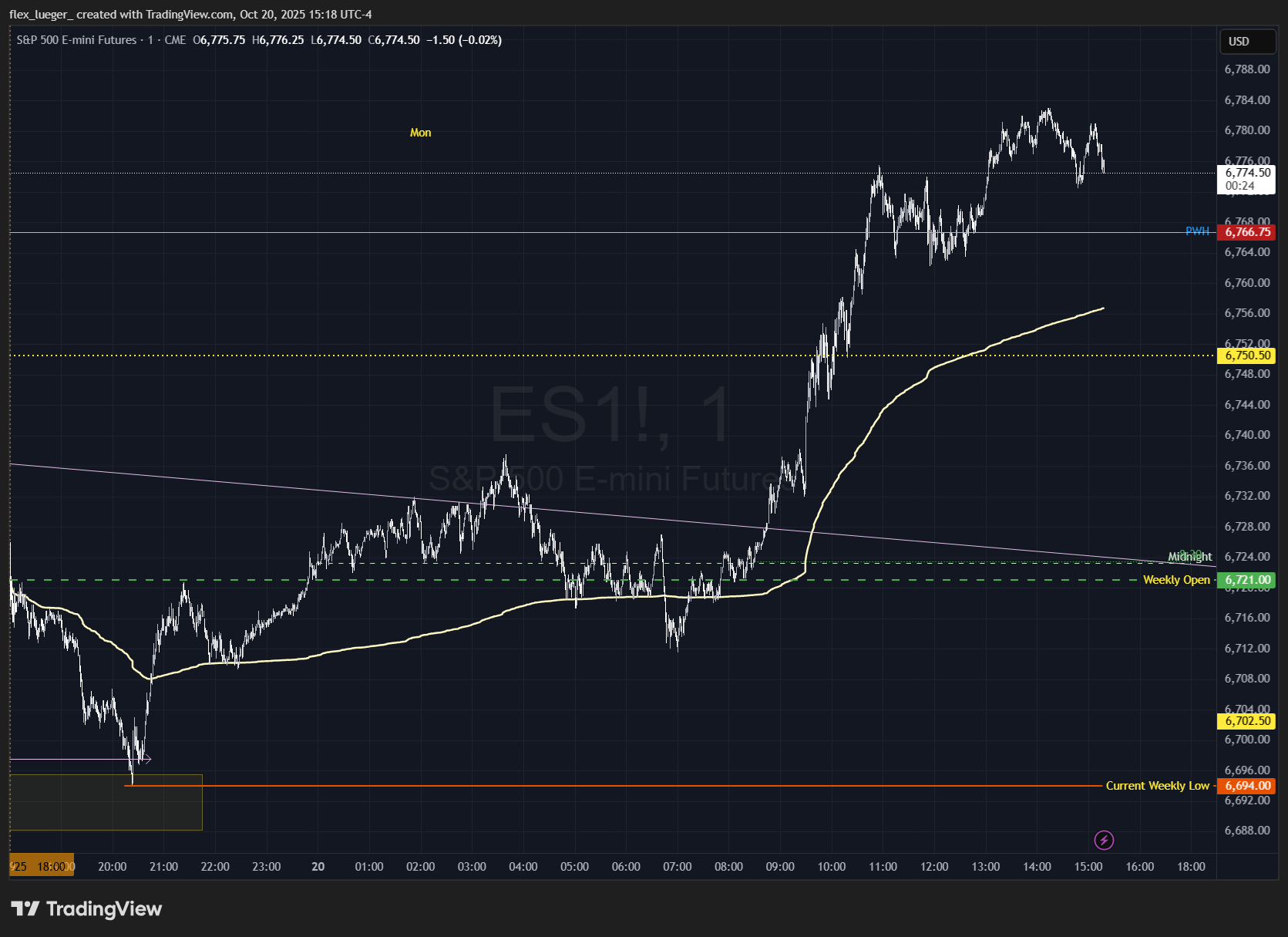
Day 1 of week 2 delivered a clean trending day higher, avoiding the typical Monday fakeout. With CPI on Friday and widespread short sentiment creating a crowded trade, I maintained a long bias and was rewarded with consistent higher highs and higher lows throughout the session.
Market Context
We're in the second half of the month with critical inflation data looming - CPI releases Friday and PCE next week. These readings will significantly impact market direction and Fed policy expectations around interest rates.
Pre-market showed the market grinding slowly higher into the upper range established from last week's price action. I divided last week's high and low into halves to create my immediate institutional dealing range for reference.
Thesis & Plan
My primary observation was that the widespread call for shorts had created an overcrowded trade on the downside. When everyone is positioned the same way, the market often moves to eliminate that positioning first.
I believed the market was pushing higher specifically to flush out short-term short interest before any meaningful downside could develop. My plan was to maintain a long bias until we see clear evidence of a shift into bear market conditions.
What Worked
The long bias paid off perfectly. Monday delivered exactly what I was looking for - a genuine trending day with consistent higher highs and higher lows. This was particularly satisfying because it avoided the classic "Monday fakeout" that traps so many traders.
The market's behavior confirmed my thesis about short covering driving price action higher. By recognizing the overcrowded short trade and positioning against it, I was able to ride the resulting squeeze.
Lessons Learned
Contrarian positioning pays when trades become overcrowded. The market has a tendency to move against the most obvious and popular positioning, especially when that positioning is heavily skewed to one side. Recognizing when "everyone" is calling for the same direction can provide valuable insight into potential market moves.
Monday fakeouts aren't guaranteed. While Monday reversals are common enough to be a widely recognized pattern, genuine trending days can and do occur. The key is reading the underlying market structure and sentiment rather than blindly expecting pattern repetition.
Weekly range analysis provides valuable reference points. Using the previous week's high and low to establish dealing ranges helps frame the institutional perspective and provides logical levels for market behavior.
Macro events create positioning opportunities. With major economic data releases approaching, market participants often position defensively or speculatively ahead of time. Understanding this dynamic can help identify when sentiment becomes too one-sided.
Stay flexible with bias until clear regime change. Rather than fighting the overall trend based on short-term patterns, it's often better to maintain directional bias until there's clear evidence of a structural shift. In this case, staying long until obvious bear market signals emerge proved to be the right approach.
The session reinforced the importance of reading market sentiment and positioning against overcrowded trades. When technical analysis aligns with sentiment analysis - in this case, recognizing excessive short positioning while price was grinding higher - it creates higher probability setups for capturing meaningful moves.