10-14-25-monday-lower-lows
Trading notes for 2025-10-14
By Sean WeldonTL;DR
Despite Monday's Trump-related rally, ES showed weak buying power and dropped overnight in a precise algorithmic pattern. I positioned with a 23 delta put and VIX call hedge, correctly anticipating the move back to weekly VWAP before the market reversed to take out weekly highs by day's end.
Market Context
The market had rallied Monday following Trump comments, but ES lacked conviction in its buying power. This weakness became apparent overnight as the market dropped in what I recognized as a familiar fractalized pattern - very uniform lower lows and lower highs that appeared algorithmically driven.
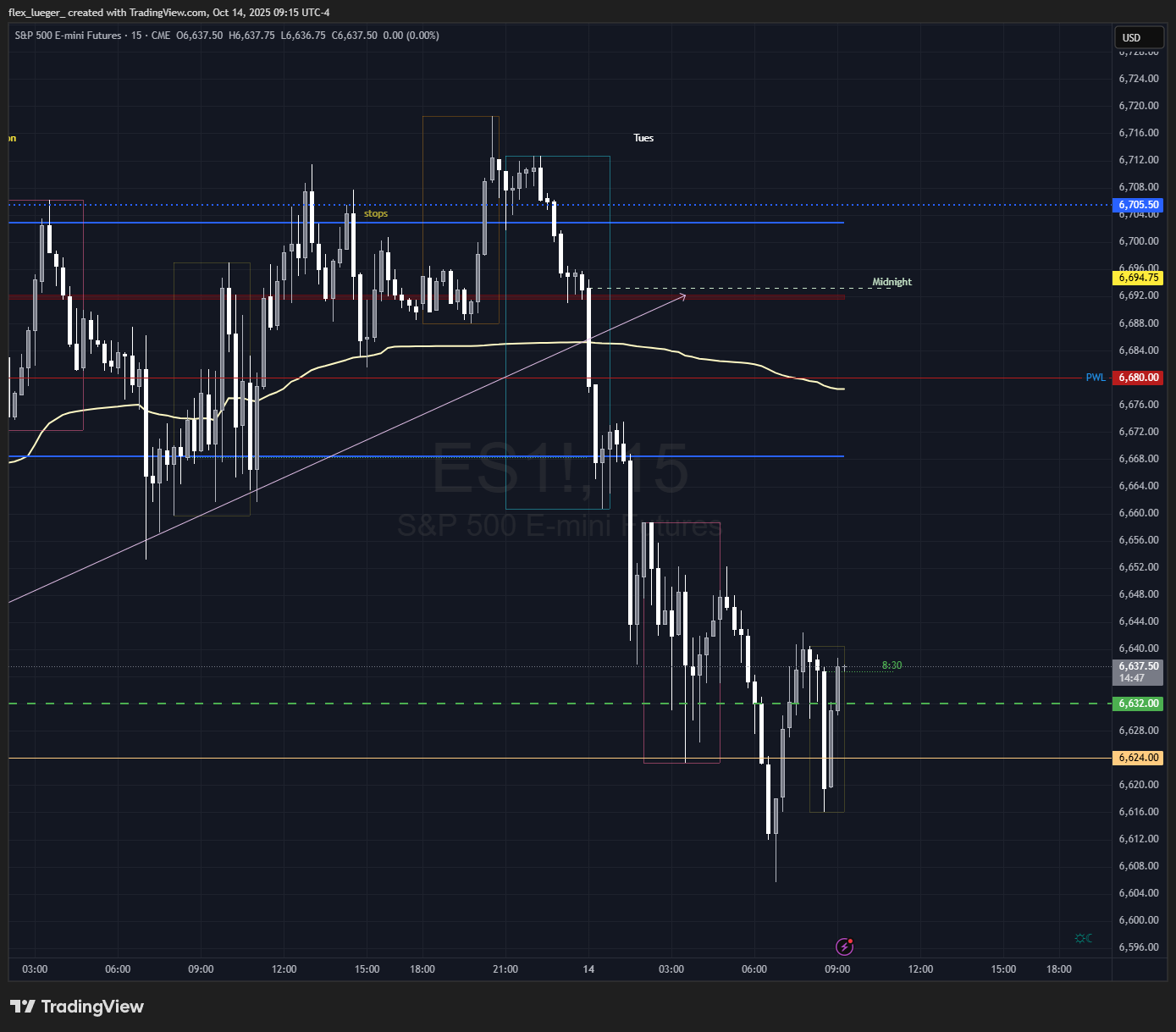
During the pre-market session, we saw a classic fake-out move: ES pushed higher at the open, took out yesterday's high, then reversed dramatically lower through the Asian and London sessions. The selling was notably one-sided, closing the new week's opening gap before pausing ahead of NYSE open. ES had stopped making new lows while waiting for the cash market, with last week's weekly close acting as temporary support.
Thesis & Plan
My thesis was built on several key observations:
- VWAP was positioned well above price, indicating low volume had allowed the drop
- This VWAP positioning suggested a potential snap-back opportunity
- The overnight weakness following Monday's unconvincing rally signaled underlying bearish pressure
- The precise, algorithmic nature of the selling pattern suggested institutional positioning
I anticipated the market would continue lower initially but then potentially reverse back toward VWAP levels.
Entries & Exits
I positioned for the expected volatility with two complementary trades:
- Long Put Position: Opened a 23 delta put at market open as ES continued its decline
- VIX Call Hedge: Had opened an ATM VIX call the previous day as portfolio protection
The timing worked well as the market pushed lower immediately after the NYSE open, continuing the overnight selling pressure.
What Worked
My pattern recognition proved accurate - the market behaved exactly as I anticipated:
VWAP Snap-Back: The market pushed right back to weekly VWAP as I predicted
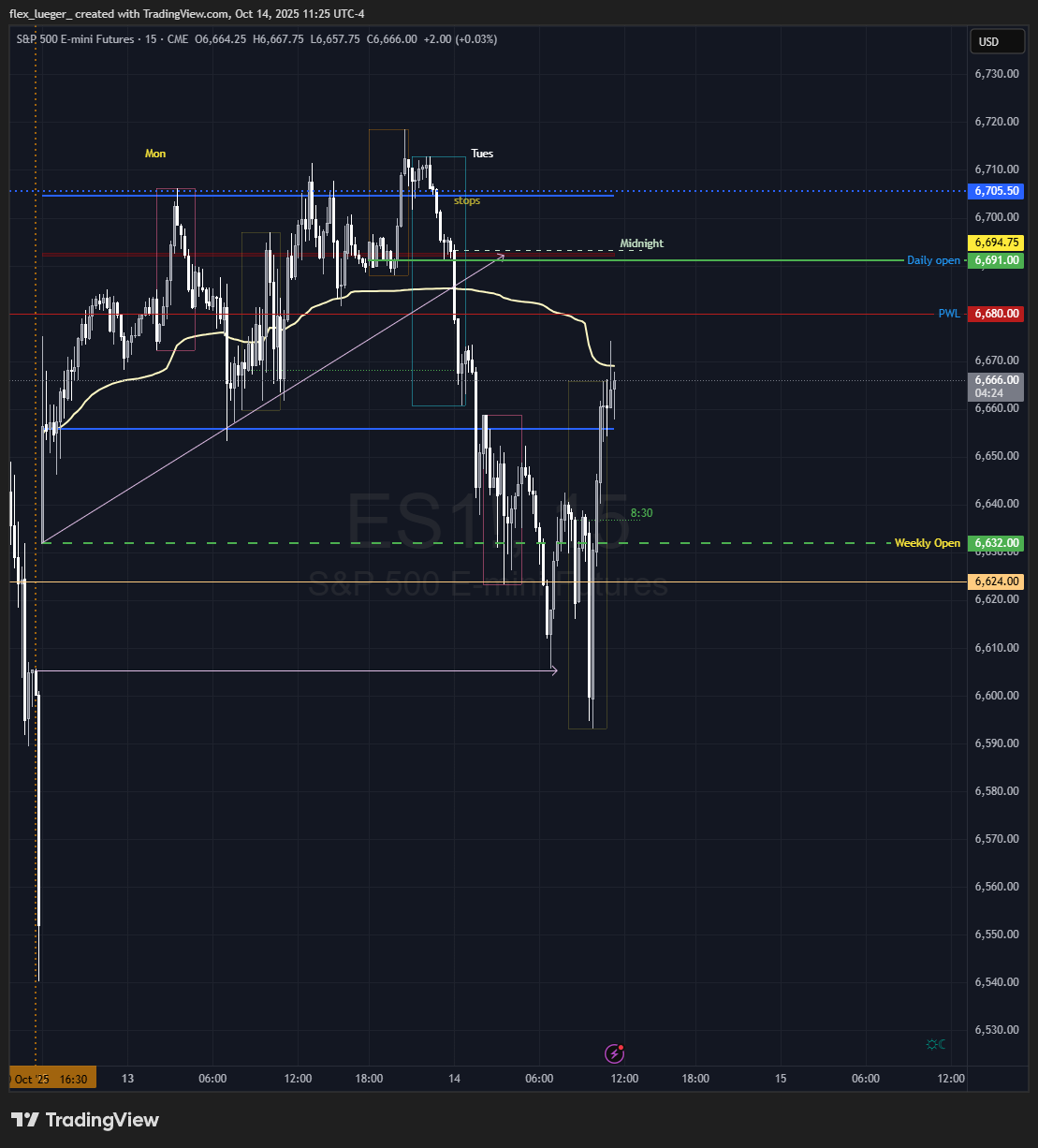
Hedged Positioning: Having both the put position for the initial drop and VIX call for volatility protection allowed me to benefit from the market's schizophrenic behavior
Reading Volume: Recognizing that low volume had allowed price to drop so far below VWAP was key to anticipating the reversal
Market Resolution
The day ended with a classic liquidity grab pattern. After making new lows for the week in the morning session, the market completely reversed character and rallied into the close, ultimately taking out the weekly highs.
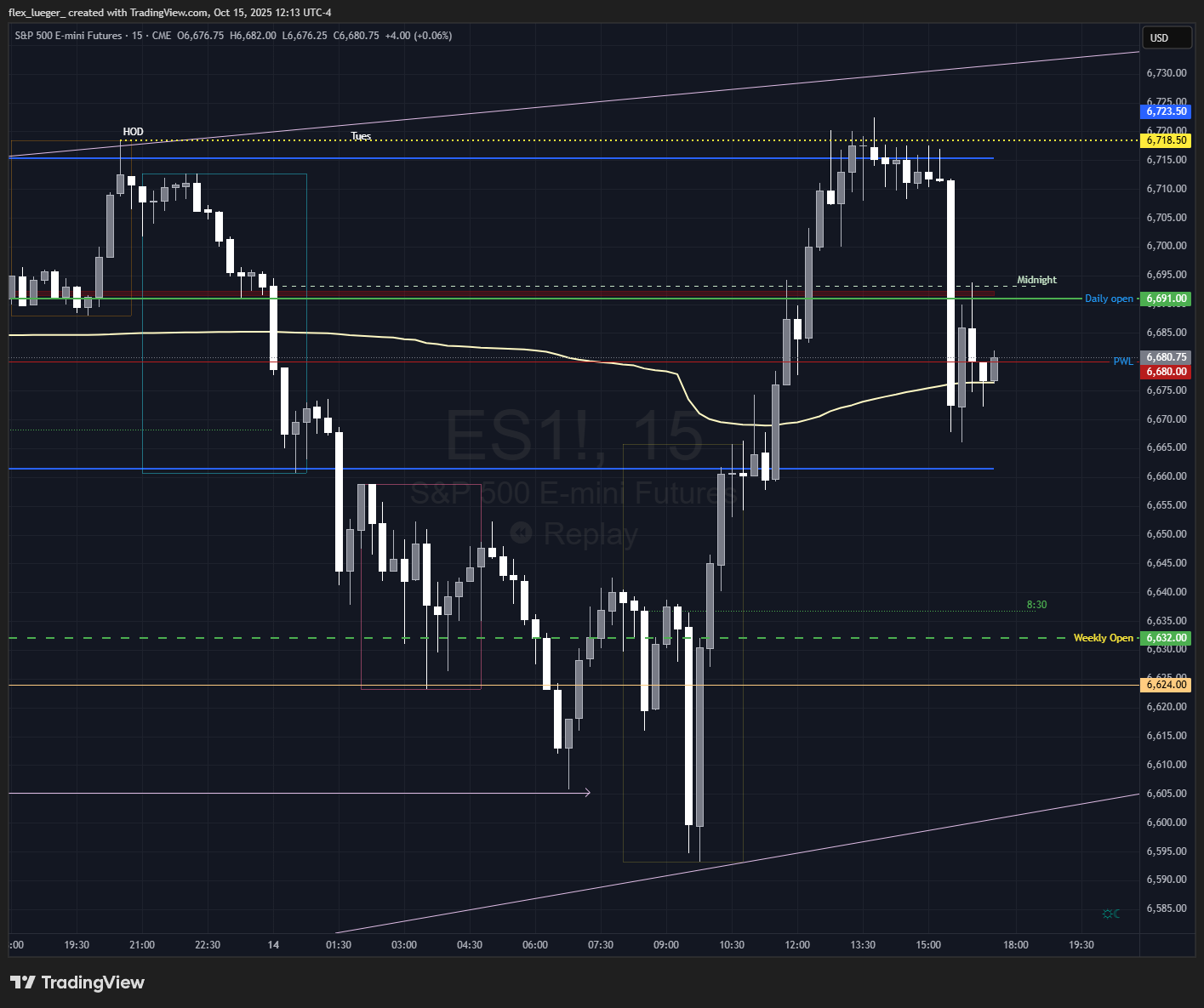
This type of price action - grabbing liquidity on both sides - is becoming increasingly common and reflects the sophisticated algorithms moving institutional size.
Lessons Learned
Several key takeaways from this trading session:
Pattern Recognition Pays: The fractalized selling pattern I've observed before played out exactly as expected. These algorithmic patterns are becoming more reliable as institutional trading dominates flow.
VWAP as Magnet: When price gets extended too far from VWAP on low volume, the snap-back is often swift and predictable. This remains one of my highest probability setups.
Hedge Early: Having the VIX call position from the previous day rather than scrambling to hedge during the volatility proved valuable. Anticipating volatility expansion before it happens is more profitable than reacting to it.
Don't Trust Overnight Gaps: The fake-out move higher in pre-market, taking out yesterday's high before reversing, reinforces my rule about being skeptical of gap moves without volume confirmation.
Liquidity Grabs Are Standard: The pattern of taking out lows first, then reversing to take out highs (or vice versa) within the same session is becoming the norm rather than the exception. Both bulls and bears got trapped in this session.
The session reinforced my confidence in reading algorithmic patterns and using VWAP relationships for timing entries and exits. The key is maintaining flexibility to trade both sides of these violent reversals rather than getting married to a directional bias.