null
Trading notes for 2025-08-22
By Sean WeldonTL;DR
What started as a promising week turned into a harsh lesson when a single SPX call spread wiped out all weekly gains after Powell's unexpected catalyst pushed markets higher. The key takeaway: need to diversify across multiple DTEs (3-5, 7-14, and 30-45 days) rather than concentrating risk in single positions.
Market Context
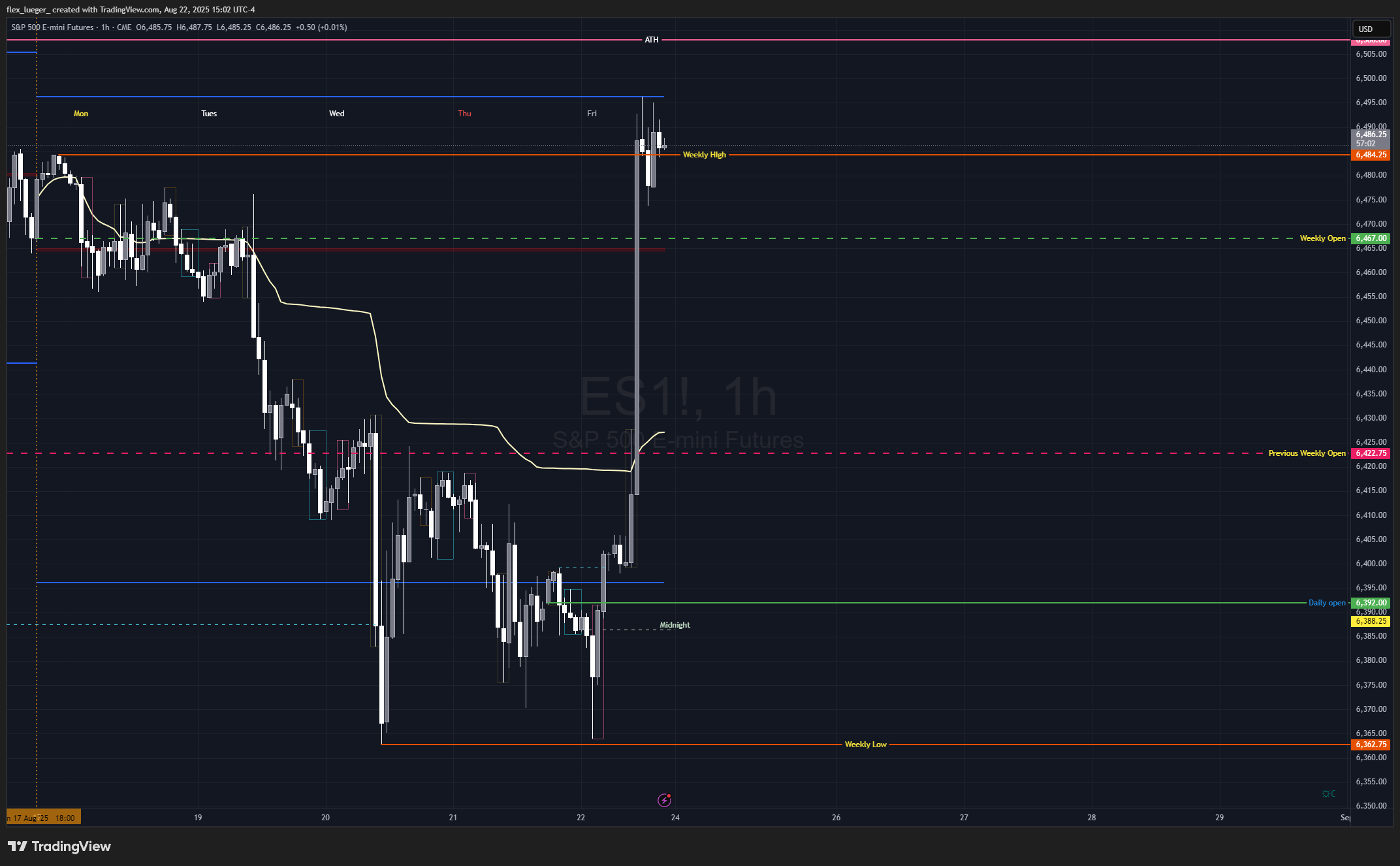
Going into Friday, the market was sitting at all-time highs with no obvious catalyst on the horizon to drive further upside. The week had seen typical action with lower pushes throughout, setting up what appeared to be a reasonable retracement setup. The SPX was positioned near the weekly Value Area High (VAH), which historically provides resistance.
Thesis & Plan
My thesis was straightforward: with SPX at ATH and no clear fundamental drivers, a retracement was the higher probability play. The setup looked clean - markets had been grinding lower all week, and Friday often sees profit-taking after strong runs. A call spread seemed like the perfect way to capitalize on this expected pullback while maintaining defined risk.
Entries & Exits
- Entry: SPX call spread betting on retracement from ATH
- Exit: Forced out after Powell catalyst drove markets against my position
- Result: -$500 loss, giving back the entire week's profits
Risk Management
This is where things went completely wrong. I violated one of the cardinal rules of trading by concentrating too much risk in a single position. The $500 loss represents not just the position itself, but ALL the progress I had made during the week. This position sizing was clearly too large relative to my account and weekly P&L targets.
What Worked / What Didn't
What Didn't Work:
- Single position concentration risk
- Underestimating the impact of unexpected catalysts (Powell)
- Not accounting for Friday's tendency to surprise
- Poor DTE selection - likely too short-term to weather volatility
What Worked:
- The technical setup was actually reasonable based on the weekly action
- Risk was defined through the spread structure
Lessons Learned
The most critical lesson here is about portfolio construction and risk diversification across time frames. I need to completely restructure my approach to DTEs:
New DTE Framework:
- 3-5 DTE: Quick scalps and momentum plays
- 7-14 DTE: Swing trades with more room to breathe
- 30-45 DTE: Longer-term thesis plays that can weather short-term noise
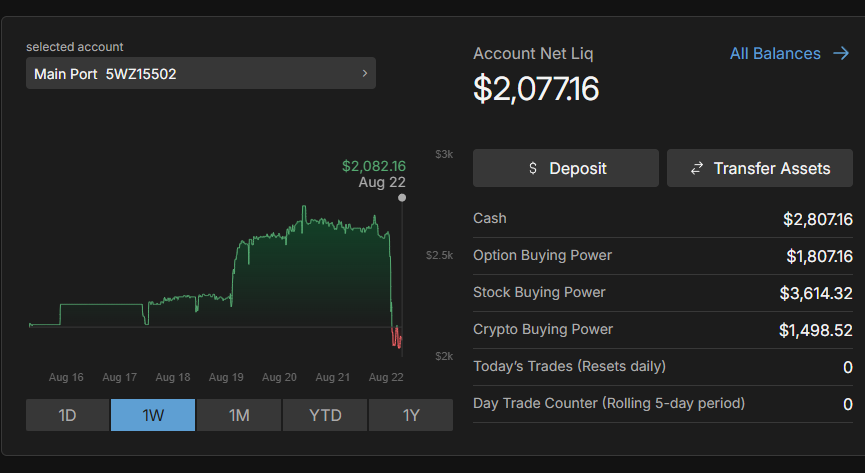
This diversification would have prevented today's disaster. If I had multiple positions across different time horizons, Powell's comments might have hurt one bucket while others remained intact or even benefited.
Key Rules Moving Forward:
- Never risk an entire week's gains on a single position
- Always have 3-5 positions working across different DTEs
- Account for "unknown unknowns" - catalysts can come from anywhere
- Friday expiration trades need extra caution due to gamma risk and news sensitivity
The frustration is real, and the self-questioning ("What's the pattern here SEAN?!") shows this isn't an isolated incident. The pattern seems to be concentration risk and poor position sizing relative to account equity.
Moving forward, the focus needs to be on building a more resilient portfolio structure rather than trying to hit home runs with single positions. The market will always find ways to humble us - the key is surviving those moments and learning from them.
This loss stings because it represents not just money, but time and effort. However, if it leads to a more disciplined approach to DTEs and position sizing, it will ultimately be a valuable (if expensive) lesson. The technical analysis skills are there, but the risk management framework needs a complete overhaul.