null
Trading notes for 2025-08-21
By Sean WeldonTL;DR
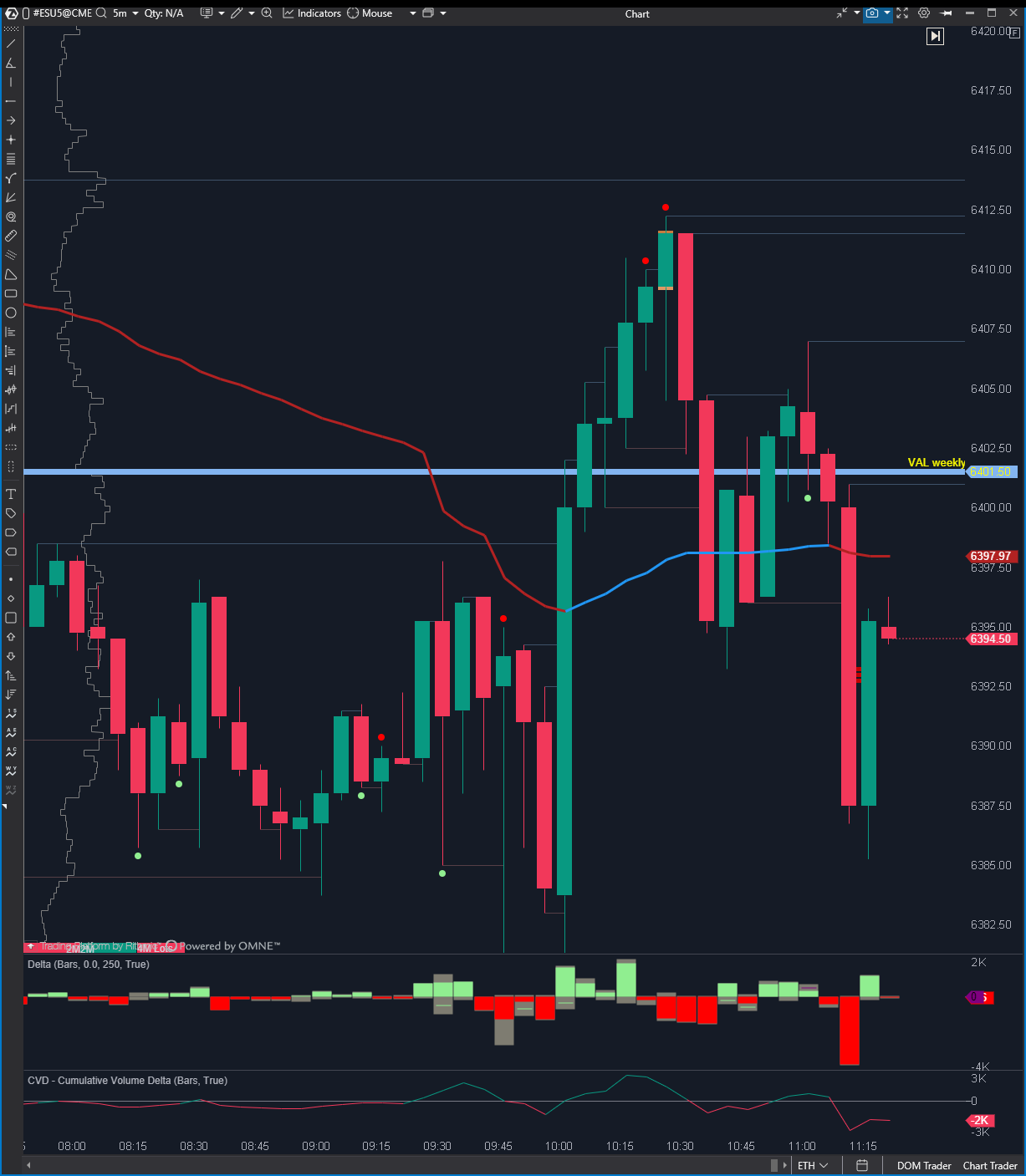
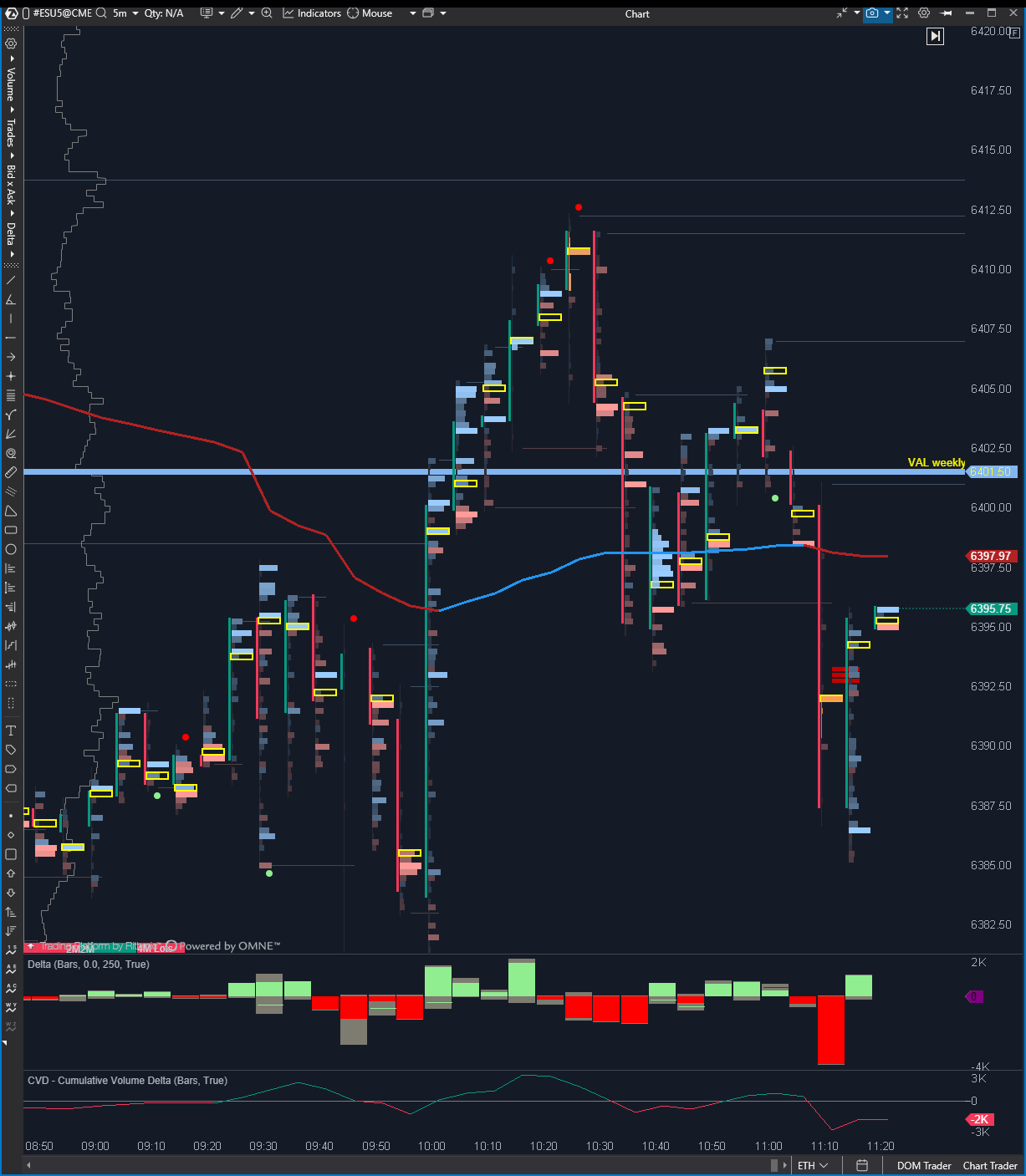
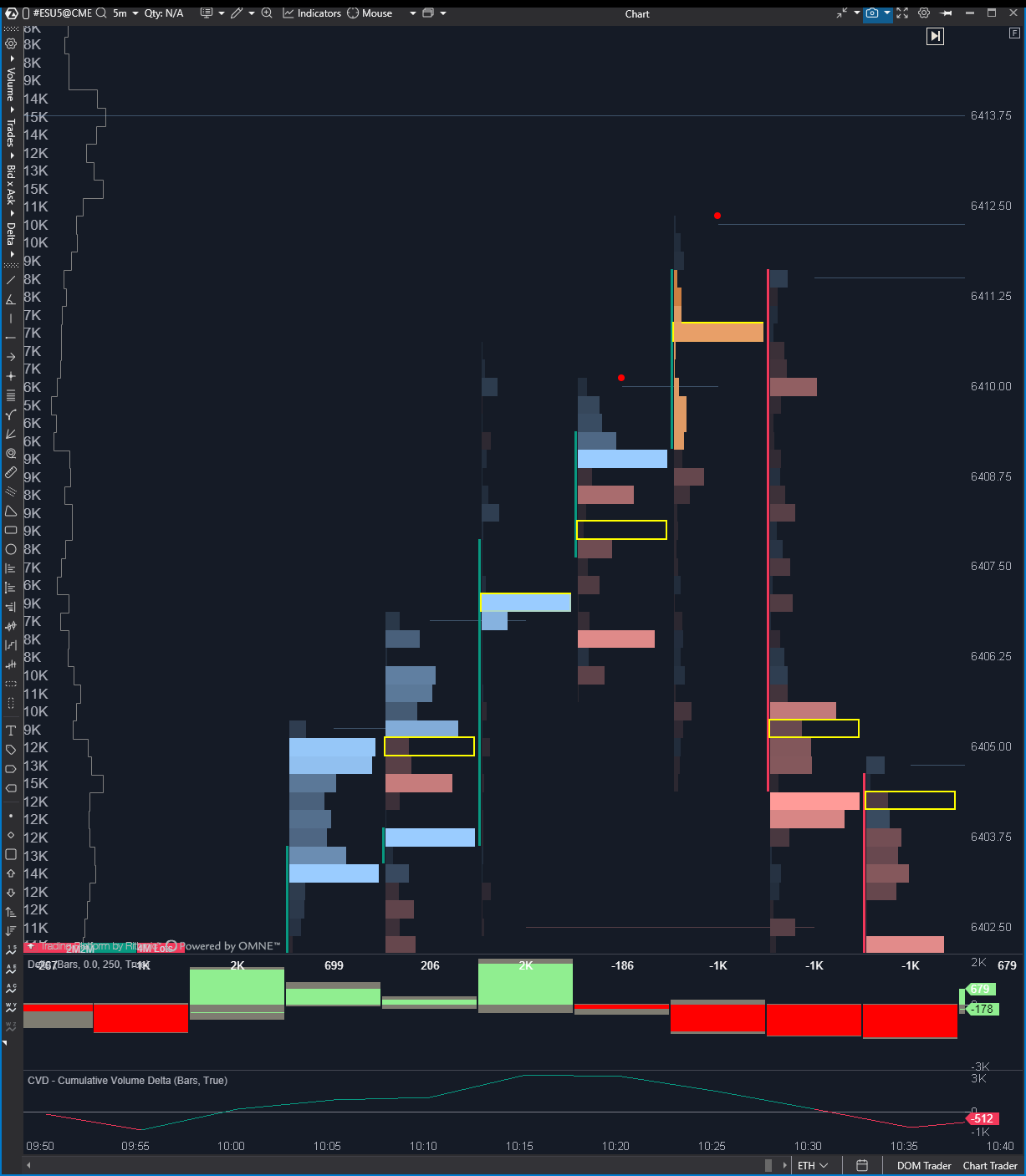
Market made new highs but showed delta divergence at the peak, followed by large sell orders that triggered a failed auction and subsequent downward move. This setup provided a classic example of how order flow divergence can signal potential reversals even when price appears strong.
Market Context
The market was pushing to new highs, creating what appeared to be a bullish continuation pattern on the surface. However, beneath the price action, the order flow was telling a different story. At these highs, delta divergence emerged - meaning that while price was making new peaks, the underlying buying pressure was actually weakening.
This type of divergence often occurs when institutional players begin distributing their positions into strength, creating a disconnect between what retail traders see (higher prices) and what's actually happening in the order flow (reduced buying interest).
Thesis & Plan
The trading thesis centered around recognizing the delta divergence as a warning sign of potential weakness. When price makes new highs but delta fails to confirm with proportional buying pressure, it often indicates that the move is losing steam and vulnerable to reversal.
The plan was to watch for additional confirmation after the divergence - specifically looking for large institutional selling to enter the market and create the catalyst for a directional change.
Entries & Exits
The setup materialized when large sell orders came in immediately after the market broke to new highs. This institutional selling pressure created the trigger needed to act on the delta divergence thesis.
The entry came on the failed auction that followed these large sell orders. Once it became clear that the market couldn't maintain its highs despite the initial breakout, the failed auction provided a lower-risk entry point for a short position as the market began its push lower.
What Worked
The delta divergence analysis proved accurate in identifying potential weakness before it became obvious in price action. By monitoring the order flow rather than just price, I was able to anticipate the reversal ahead of traders focused solely on the breakout to new highs.
The patience to wait for confirmation through the large sell orders was crucial. Rather than acting immediately on the divergence alone, waiting for the institutional selling provided better entry timing and higher probability setup.
The failed auction served as an excellent entry trigger, offering a clear signal that the breakout attempt had been rejected and momentum was shifting to the downside.
Lessons Learned
This trade reinforced several key principles about order flow analysis:
Delta divergence is a warning, not a signal - The divergence alone wasn't enough to act on. It needed confirmation through actual selling pressure and failed price action to become a viable trade setup.
Institutional order flow trumps retail sentiment - While the breakout to new highs likely attracted retail buying interest, the large institutional sell orders ultimately determined the direction.
Failed auctions provide excellent entry opportunities - When a market fails to hold new highs after a breakout, especially in the context of underlying weakness, it often leads to swift reversals.
Order flow gives you an edge in timing - By watching delta and order flow, you can often position yourself ahead of moves that only become obvious to price-action-only traders after they've already begun.
The importance of having multiple confluences cannot be overstated. This setup worked because it combined delta divergence, institutional selling, and a failed auction - three separate confirming factors that all pointed in the same direction. Any one of these factors alone would have been insufficient, but together they created a high-probability trading opportunity.