null
Trading notes for 2025-08-13
By Sean WeldonTL;DR
Market hit all-time highs while put premium remained stubbornly elevated above call premium - a classic sign of institutional hedging during strength rather than genuine bullish conviction. Combined with heavy negative call gamma at the 6500 level, this setup created potential for gamma-fueled acceleration toward key strikes followed by volatility once hedging dynamics shifted.
Market Context
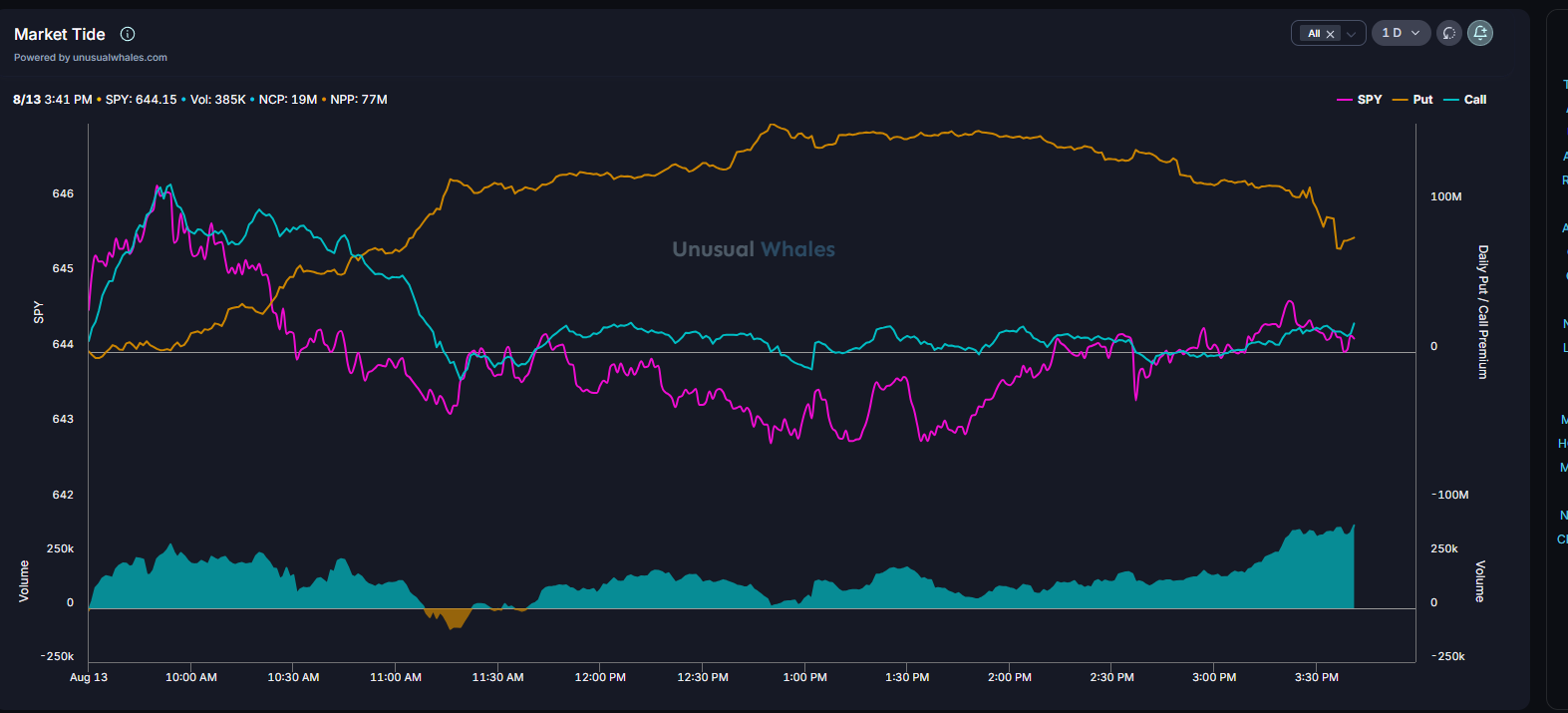
SPY was grinding to new all-time highs in what should have been a celebratory moment for bulls. However, the options flow told a different story entirely. Despite the bullish price action, put premium (yellow line) was running significantly higher than call premium (blue line) throughout the session.
This divergence is rarely seen during genuine risk-on rallies and immediately caught my attention. When markets are truly euphoric and driven by FOMO buying, call premium typically explodes alongside price. Instead, we saw call premium drift sideways to slightly lower in the afternoon session - a clear warning sign that this rally lacked the typical retail chase and institutional conviction.
Thesis & Plan
My thesis centered around recognizing this as institutional hedging behavior rather than directional positioning. Large players weren't betting against the market - they were protecting unrealized gains while the market sat extended at all-time highs. This created a unique setup where:
- Dealer positioning was likely short gamma from selling protection to institutions
- The 6500 strike showed massive negative call gamma on the GEX profile
- Price could gamma-ramp toward 6500 but face rejection without sustained call buying
The plan was to monitor how price reacted around the 6500 level, looking for signs of exhaustion or continuation based on real-time options flow.
Market Dynamics
Price Up, Put Premium Up = Hedging in Strength
The persistent elevation in put premium despite new highs indicated institutional hedging flows. This wasn't bearish positioning - it was smart money protecting gains in an extended market. When you're sitting on significant unrealized profits at all-time highs, buying protective puts is prudent portfolio management.
This also suggested dealer positioning was likely short gamma, particularly if much of the put premium was concentrated in 0DTE or near-term expirations. Market makers selling protection to institutions would need to hedge by selling futures as those puts gained value.
Call Premium Divergence
The failure of call premium to spike alongside price was perhaps the most telling signal. In genuine bull runs driven by excitement and FOMO, call buying typically explodes as retail and momentum traders pile in. The sideways drift in call premium suggested:
- The rally wasn't driven by aggressive new call buying
- Other flows (short covering, dealer hedging, futures buying) were the primary drivers
- Missing upside fuel from typical retail participation
Risk Management
The gamma landscape presented clear risk parameters. With heavy negative call gamma at 6500, market makers were positioned short calls at that strike. This created predictable hedging flows:
- Below 6500: Dealers needed to buy futures to hedge their short call exposure
- Above 6500: Hedging requirements could flip quickly, removing buying support
This setup meant 6500 could act as both a magnet (due to hedging flows) and a potential rejection point if new call demand didn't materialize.
What Worked / What Didn't
What Worked:
- Identifying the put/call premium divergence early provided clear insight into market structure
- Understanding the gamma positioning at 6500 offered precise levels to monitor
- Recognizing this as hedging flow rather than directional positioning prevented misreading market sentiment
What Didn't:
- The analysis needed more granular examination of expiration structure to determine if risk was intraday or multi-day
- Could have better quantified the dealer positioning to assess magnitude of potential moves
Trading Implications
This setup presented several tactical opportunities:
For Premium Sellers:
- Selling call spreads slightly above 6500 made sense if order flow showed buyer exhaustion into that strike
- The negative gamma overhead suggested limited upside expansion without sustained buying
For Day Traders:
- Long bias on dips below 6500 while dealers remained short calls and needed to buy dips for hedging
- Defensive positioning if 6500 traded without follow-through call buying, as mean reversion could be swift
For Swing Traders:
- The elevated put premium while holding near highs indicated underlying caution
- Any crack in price could accelerate lower as protective puts moved ITM and dealer hedges flipped short
Lessons Learned
Premium relationships matter more than price alone - The put/call premium divergence provided more insight than the bullish price action itself
Gamma positioning creates predictable flow patterns - Understanding dealer exposure at key strikes allows anticipation of hedging-driven moves rather than just reacting to them
Context is everything in options flow - High put premium at all-time highs tells a completely different story than the same reading during a selloff
Missing pieces need identification - Recognizing the need for 0DTE expiry analysis to distinguish between intraday fade risk versus multi-day unwind scenarios
This session reinforced that successful options-based analysis requires looking beyond surface-level price action to understand the underlying structural forces driving market behavior. The divergence between price strength and premium relationships provided a roadmap for both opportunity and risk management that pure technical analysis would have missed.