null
Trading notes for 2025-08-12
By Sean WeldonTL;DR
Made a profitable SPX put spread trade at the low of the day during a trending market. This experience reinforced my evolving strategy to avoid buying 0 DTE calls entirely, instead focusing on buying puts when bearish and selling put spreads when bullish due to how volatility behaves differently in up versus down moves.
Market Context
The SPX was in a clear trending pattern, and I identified what appeared to be the low of the day as an entry opportunity. The market structure was providing clear directional signals that allowed for a well-timed entry on the put spread.

Thesis & Plan
My thesis was straightforward: catch the SPX at what I believed was the low of the day with a put spread position. This aligned with my broader strategic shift away from buying 0 DTE calls and toward a more nuanced approach to premium buying and selling based on market direction and volatility characteristics.
The plan was to capitalize on the trending nature of the market by positioning at what appeared to be a key turning point - the low of the day.
Entries & Exits
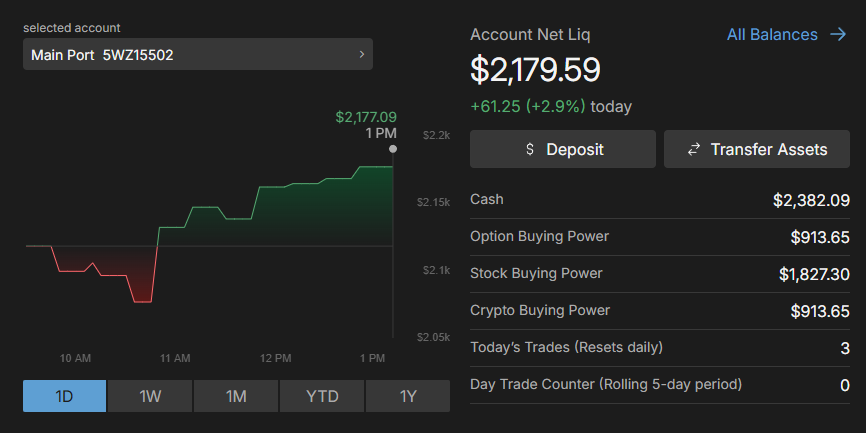
I executed a SPX put spread right at the identified low of the day during the trending move. The timing proved effective as the position moved in my favor relatively quickly.
What Worked
The key success factor was accurately identifying the low of the day in a trending market. This allowed me to enter the put spread at an optimal price point and ride the subsequent move. The trade validated my growing conviction about being more selective with premium buying strategies.
Lessons Learned
This trade reinforced a significant strategic evolution in my approach to 0 DTE options trading. I've come to realize that buying 0 DTE calls simply isn't worth it from a risk-reward perspective. The asymmetric nature of volatility in the options market means that puts tend to get premium expansion as markets fall, while calls don't benefit from the same volatility boost during rallies.
Going forward, my framework will be:
• When bearish: Buy puts outright to benefit from both directional movement and volatility expansion • When bullish: Sell put spreads rather than buy calls, collecting premium instead of paying inflated call premiums • Alternative bearish play: Consider call spreads as another way to express bearish views
This approach acknowledges a fundamental truth about market behavior - fear moves faster than greed, and volatility spikes happen more dramatically on the downside than the upside. By aligning my strategy with these market realities rather than fighting them, I can improve my edge in the 0 DTE space.
The SPX put spread trade was a perfect example of this philosophy in action. Instead of trying to time a perfect bottom with expensive calls, I used a put spread to benefit from what I believed was an oversold condition, capturing profit as the market found its footing.
This strategic shift represents a more mature approach to options trading - one that works with market mechanics rather than against them. The goal isn't to be right about direction at any cost, but to structure trades where the probabilities and payoffs are most favorable given how volatility and premium behave in different market conditions.